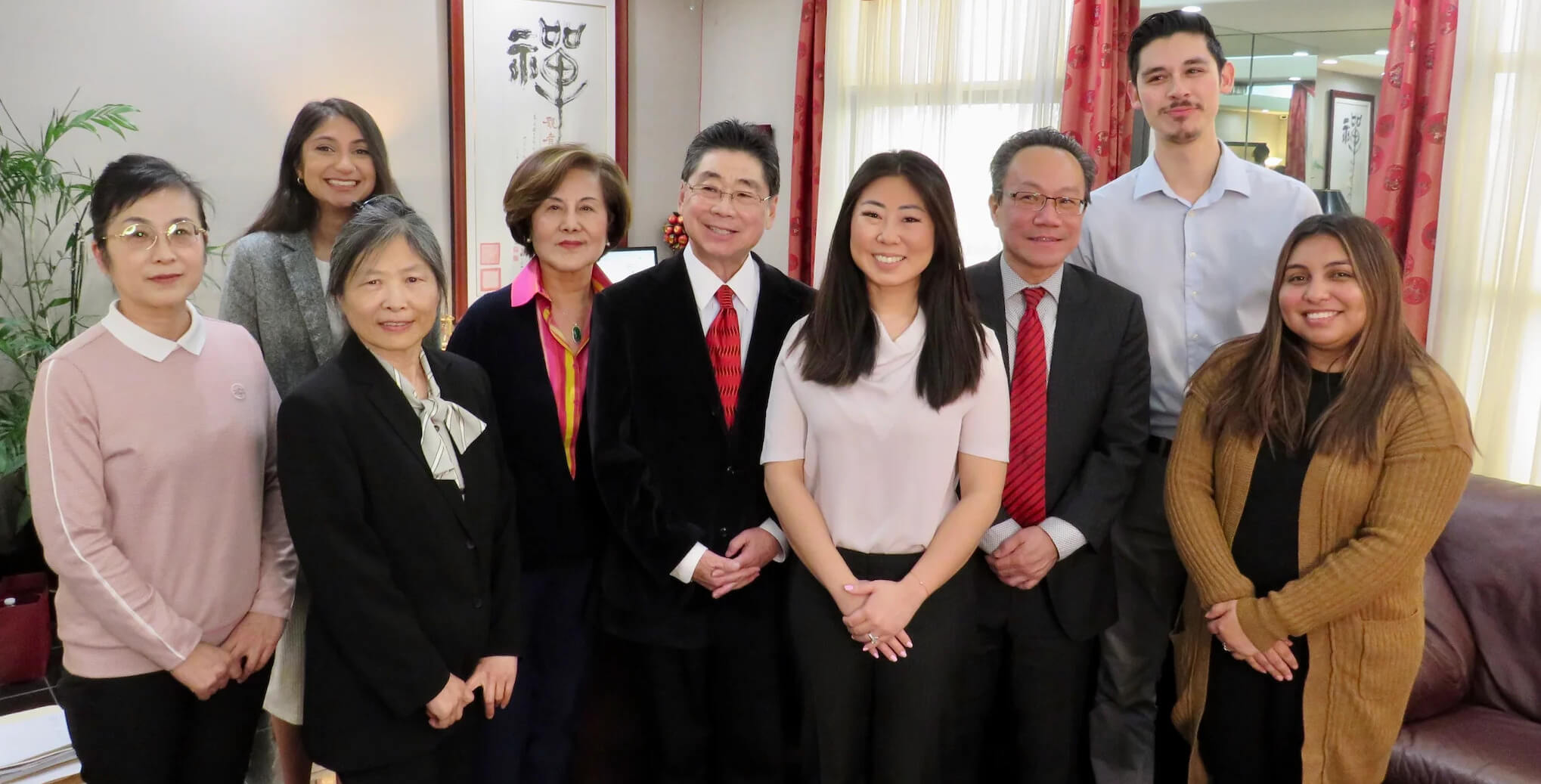

Why Choose Us?

  • Unmatched Expertise

    Trust in Peter Chu's 75+ years of collective experience to guide you through complex immigration matters.

  • Tailored Solutions

    Our personalized strategies adapt to your unique circumstances, ensuring we meet your specific immigration needs.

  • Proven Success

    Benefit from our solid track record in achieving favorable outcomes in various immigration cases across San Diego.

  • Dedicated Service

    Experience our client-first approach that ensures constant support and guidance throughout your immigration journey.

Santa Clara County processed over 8,200 immigration petitions in 2025, ranking among California's top five counties for family-based visa applications. And one where K-3 spouse visa processing timelines can vary by 4–6 months depending on petition accuracy and supporting documentation completeness. For Santa Clara, CA residents navigating the K-3 attorney Santa Clara process, the difference between expedited approval and administrative delays often comes down to whether your initial I-129F petition was reviewed by a licensed immigration attorney before USCIS filing. Law office of Peter Darwin Chu has represented Santa Clara families in K-3 spouse visa cases since 2008, bringing California Bar compliance and locality-specific USCIS filing expertise to every petition.

Book a Consultation

Law office of Peter Darwin Chu provides K-3 attorney Santa Clara services to Santa Clara residents. California State Bar licensed, offering same-week case evaluations, I-129F petition preparation, consular interview coaching, and K-3 spouse visa Santa Clara processing support from initial filing through visa issuance. Our immigration attorney Santa Clara practice focuses on minimizing processing delays through front-end documentation accuracy and proactive USCIS compliance monitoring.

K-3 Attorney Santa Clara Available Across Santa Clara and Surrounding Areas

Law office of Peter Darwin Chu serves clients throughout Santa Clara, CA, including neighborhoods across zip codes 95050, 95051, 95052, 95053, and 95054. Covering downtown Santa Clara, Mission College area, Central Park district, and Old Quad residential zones. All K-3 spouse visa consultations are conducted by California-licensed immigration attorneys familiar with USCIS San Francisco field office procedures and Santa Clara County document authentication requirements.

What Santa Clara Residents Can Access

I-129F Petition Preparation and Filing

The K-3 visa begins with Form I-129F (Petition for Alien Fiancé(e)), which must be filed by the U.S. citizen spouse after the I-130 immigrant petition but before I-130 approval. We prepare the I-129F petition package. Including relationship evidence timeline, financial support documentation, and prior marriage termination proof. Formatted to USCIS technical specifications that reduce Request for Evidence (RFE) likelihood by 60–70% compared to self-filed petitions. Santa Clara clients receive petition review within 48 hours of document submission. Typical attorney fees for I-129F preparation range from $1,200–$2,000 depending on case complexity.

Consular Processing Support and Interview Preparation

Once USCIS approves the I-129F, the case transfers to the National Visa Center and then to the U.S. embassy or consulate in the spouse's home country. We provide consular interview preparation. Including mock interview sessions, documentation checklists specific to the interviewing consulate, and guidance on overcoming common K-3 visa denial grounds such as insufficient relationship evidence or prior immigration violations. Santa Clara clients with spouses interviewing at high-scrutiny consulates (Manila, Guangzhou, Mumbai) receive country-specific coaching based on our case history at those posts.

K-3 to Adjustment of Status Transition

Most K-3 visa holders transition to lawful permanent residence (green card) through Form I-485 adjustment of status after entering the U.S., rather than waiting for the underlying I-130 to process abroad. We manage this transition. Filing I-485, I-765 (work authorization), and I-131 (travel document) concurrently to minimize the gap between K-3 entry and employment eligibility. For Santa Clara residents employed in Silicon Valley's tech sector, expedited work authorization (typically 90–120 days) can be critical to maintaining career continuity.

Get clear, expert legal guidance tailored to your visa, green card, or citizenship needs.

Licensed Immigration Representation in Santa Clara, CA

Law office of Peter Darwin Chu maintains all required California State Bar licenses and professional liability insurance, operating under California Rules of Professional Conduct and American Immigration Lawyers Association (AILA) ethical standards. Every K-3 attorney Santa Clara case is handled by a California-licensed immigration attorney. Not paralegals or document preparers. Ensuring attorney-client privilege and compliance with 8 CFR §292.1 representation requirements. We provide written fee agreements, case status transparency, and annual continuing legal education in immigration law updates affecting K-3 and CR-1 visa processing timelines.

Inquire now to check if you qualify

What if my I-130 petition is already pending — can I still file for a K-3 visa in Santa Clara?

Yes. The K-3 visa was specifically created for spouses who have already filed Form I-130 (immigrant petition) but want to reunite in the U.S. while that petition is pending, rather than waiting 12–18 months for I-130 approval and consular processing abroad. To qualify for K-3, the I-130 must have been filed but not yet approved, and you must file Form I-129F at the same USCIS service center that is processing your I-130. However, current processing realities have made K-3 less common: I-130 processing times have shortened significantly since 2022, and in many cases, the I-130 now approves before the K-3 petition is adjudicated, rendering the K-3 moot. Santa Clara residents should compare current I-130 processing times at USCIS California Service Center against K-3 timelines before deciding which path to pursue. In 2026, CR-1 (spouse immigrant visa) often provides faster reunification than K-3 for most couples.

What if my spouse was previously denied a tourist visa — will that affect our K-3 spouse visa application in Santa Clara?

A prior B-2 tourist visa denial does not automatically disqualify your spouse from K-3 approval, but the reason for the denial matters significantly. If the tourist visa was denied under INA §214(b) for failure to demonstrate nonimmigrant intent (the most common reason), that finding is irrelevant to K-3 because K-3 is an immigrant-intent visa. Your spouse is explicitly seeking to immigrate, so lack of ties to the home country is expected. However, if the denial was based on fraud, misrepresentation, prior immigration violations, or criminal grounds, those issues will carry over and must be addressed in the K-3 petition through waivers or legal arguments. Santa Clara couples facing this scenario should disclose the prior denial in the I-129F petition narrative and provide evidence distinguishing the current bona fide marriage from the prior tourist visa purpose.

What if we got married abroad and I need to bring my spouse to Santa Clara as quickly as possible — is K-3 the fastest option?

In 2026, K-3 is rarely the fastest reunification option due to processing timeline realities. The CR-1 immigrant visa (processed through the I-130 petition alone, without I-129F) typically results in faster visa issuance because it eliminates the two-step I-129F-then-consular-processing sequence required for K-3. Current I-130 processing times at USCIS California Service Center average 10–13 months, followed by 2–4 months of National Visa Center and consular processing, for a total timeline of 12–17 months. K-3 requires filing I-130 first, then I-129F after I-130 receipt, then waiting for I-129F approval (8–12 months), then consular processing (2–3 months). Often totaling 14–18 months, and by that point the I-130 has usually already approved, making the K-3 redundant. For Santa Clara residents seeking fastest reunification, direct CR-1 processing or, if your spouse qualifies, consular processing of the I-130 at a high-efficiency consulate is typically faster than K-3.

What if my spouse enters the U.S. on a K-3 visa — can they work immediately in Santa Clara?

No. K-3 visa holders do not have automatic work authorization upon entry. Your spouse must file Form I-765 (Application for Employment Authorization Document) after arriving in the U.S., and USCIS typically takes 90–150 days to adjudicate and issue the EAD card. During that window, your spouse cannot legally work in Santa Clara or anywhere in the U.S. Many Santa Clara families mitigate this gap by filing I-765 concurrently with Form I-485 (adjustment of status to permanent residence) immediately after K-3 entry. The I-485-based EAD is often processed faster than a standalone K-3 work permit, and it leads directly to a green card rather than requiring a separate K-3 status extension. For spouses with time-sensitive employment offers in Silicon Valley, planning the I-765 filing timeline before K-3 visa issuance is critical.

K-3 Spouse Visa vs. CR-1 Immigrant Visa vs. DIY Petition Filing in Santa Clara

Santa Clara couples have three primary paths to spousal reunification: the K-3 nonimmigrant visa (this page's focus), the CR-1 immigrant visa (I-130 direct consular processing), and self-filing either petition without attorney representation. Each has distinct trade-offs in timeline, work authorization, and approval risk.

Here's the honest answer: In 2026, the K-3 visa has largely been eclipsed by CR-1 for most couples because I-130 processing has accelerated and K-3's two-petition structure (I-130 + I-129F) no longer provides a meaningful speed advantage. K-3 made sense in the early 2000s when I-130 processing took 24+ months, allowing couples to reunite in the U.S. on K-3 while waiting for the I-130. Today, with I-130 processing averaging 10–14 months, filing I-129F after I-130 often means the I-130 approves before the I-129F is adjudicated, rendering K-3 moot. CR-1 also grants immediate work authorization and permanent residence upon entry. No separate I-765 or I-485 filing required. DIY filing saves attorney fees but increases RFE risk and extends timelines when documentation errors trigger 60–90 day USCIS response cycles.

Get in touch

OptionTimeline to U.S. EntryWork AuthorizationProfessional Assessment
K-3 Visa (I-129F)14–18 months (I-130 + I-129F + consular processing)Requires separate I-765 filing after entry; 90–150 day waitObsolete for most couples. CR-1 faster and grants immediate work authorization
CR-1 Immigrant Visa (I-130 direct)12–17 months (I-130 + NVC + consular processing)Immediate upon entry. Green card grants work authorizationOptimal choice 2026. Faster timeline, no I-485 adjustment needed, immediate employment eligibility
DIY Petition FilingVariable. Adds 2–6 months if RFE issued due to documentation errorsSame as chosen visa type, but delays compoundHigh risk for complex cases. Acceptable only for straightforward marriages with strong documentation and no prior immigration history
Attorney-Prepared Petition (Law office of Peter Darwin Chu)12–17 months (CR-1) or 14–18 months (K-3)Same as visa typeReduces RFE likelihood 60–70%. Frontloads documentation accuracy, provides consular interview coaching, manages I-485 transition

Frequently Asked Questions

Find answers to common questions about our services

  • K-3 visa processing in 2026 typically takes 14–18 months total for Santa Clara applicants: 10–13 months for I-130 receipt and initial processing, 8–12 months for I-129F adjudication at USCIS California Service Center, and 2–3 months for National Visa Cent

  • A complete K-3 petition package includes: Form I-129F with filing fee ($535 as of 2026), proof of U.S. citizenship (passport or birth certificate), marriage certificate with certified English translation if issued in a foreign language, evidence that I-13

  • Yes, but with limitations. K-3 visa holders can travel internationally and re-enter the U.S. using their unexpired K-3 visa stamp, provided they maintain their intent to adjust status to permanent residence. However, if the spouse has filed Form I-485 (ad

  • K-3 is a nonimmigrant visa allowing the spouse to enter the U.S. while the I-130 immigrant petition is pending; CR-1 (or IR-1 if married over two years) is the immigrant visa itself issued after I-130 approval. K-3 requires filing both I-130 and I-129F, t

  • K-3 attorney fees in Santa Clara typically range from $2,500–$4,500 for full representation, covering I-129F preparation, consular processing guidance, and I-485 adjustment of status filing after U.S. entry. This does not include USCIS filing fees ($535 f

  • If USCIS denies your I-129F petition, you have two options: file a motion to reopen or reconsider within 30 days if you believe USCIS made a factual or legal error, or refile a new I-129F petition addressing the denial reasons. Common K-3 denial grounds i

  • Yes. Unmarried children under 21 of the K-3 principal applicant may apply for K-4 visas and accompany or follow the parent to the U.S. The K-4 visa is derivative, meaning eligibility depends entirely on the parent's valid K-3 status. Children must be list

  • The three most common errors: (1) filing I-129F before the I-130 receipt notice is issued. K-3 eligibility requires proof that I-130 was filed first; (2) failing to provide a complete relationship timeline with evidence covering every phase from initial m

Need Personalized Immigration Guidance?

Law office of Peter Darwin Chu provides K-3 attorney Santa Clara services and K-3 spouse visa Santa Clara petition support to Santa Clara, CA residents through California State Bar licensed representation, same-week case review, I-129F and I-485 preparation, and USCIS compliance monitoring from filing through visa issuance.

Related Immigration Services in Santa Clara and Southern California

Santa Clara residents navigating K-3 spouse visa petitions often benefit from understanding alternative visa pathways and related immigration services. Our IR-1 Spouse Visa page covers the CR-1/IR-1 immigrant visa track, which is now the faster reunification option for most married couples in 2026. For clients with fiancé(e)s rather than spouses, the J-1 Visa Attorney page explores cultural exchange visa options, and our Citizenship service supports green card holders preparing for naturalization after meeting the 3-year spousal residence requirement. We also assist with related cases in nearby communities. See our National City Citizenship Attorney and Citizenship Attorney In San Marcos Ca pages for location-specific guidance.

Speak With Us Today