
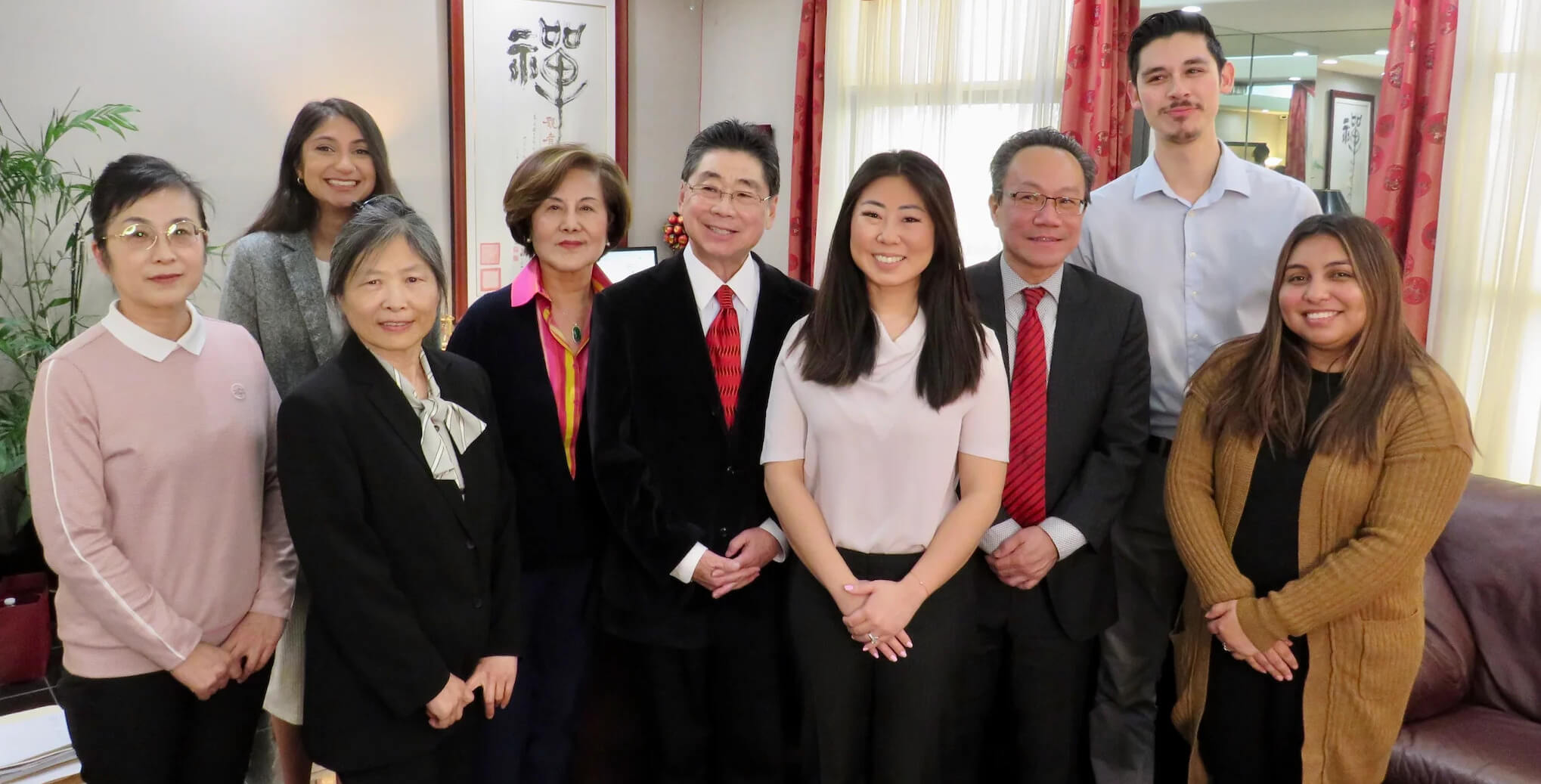
Why Choose Us?
-

Unmatched Expertise
Trust in Peter Chu's 75+ years of collective experience to guide you through complex immigration matters.
-

Tailored Solutions
Our personalized strategies adapt to your unique circumstances, ensuring we meet your specific immigration needs.
-

Proven Success
Benefit from our solid track record in achieving favorable outcomes in various immigration cases across San Diego.
-

Dedicated Service
Experience our client-first approach that ensures constant support and guidance throughout your immigration journey.


Get clear, expert legal guidance tailored to your visa, green card, or citizenship needs.

Inquire now to check if you qualify
K-3 Visa vs. CR-1 Immigrant Visa vs. DIY Filing: What Seattle Families Should Know
Seattle families seeking to reunite with a foreign spouse face three primary paths: filing a K-3 nonimmigrant visa petition, filing a CR-1/IR-1 immigrant visa petition and waiting abroad, or attempting to file the petition without legal representation. Each path has distinct timelines, costs, and risks.
Here's the honest answer: The K-3 visa was created in 2000 to reduce wait times for spouses of U.S. citizens, but in 2026, I-130 processing has accelerated to the point where many Seattle families see no time advantage from filing K-3. The K-3 requires two separate petitions (I-130 and I-129F), two sets of filing fees, and coordination between USCIS, the National Visa Center, and the consular post. Adding complexity without always reducing separation time. For families where the I-130 is already pending and processing slowly, K-3 can still provide months of time savings. For families just beginning the process, direct CR-1/IR-1 filing is often faster and cheaper. DIY filing is risky for K-3 cases because a single documentation error. Such as failing to include required evidence of marital validity or missing a consular interview deadline. Can result in denial, administrative processing delays, or the need to refile entirely.
| Path | Timeline | Cost | Risk Level | Professional Assessment |
|---|---|---|---|---|
| K-3 Visa (Attorney) | 6–10 months petition to visa | $2,500–$4,500 attorney fees + $535 I-129F + $325 I-130 | Medium. Depends on I-130 approval | Best for: Families with I-130 already pending 6+ months |
| CR-1/IR-1 Immigrant Visa (Attorney) | 10–14 months petition to visa | $2,000–$3,500 attorney fees + $535 I-130 + $325 NVC | Low. Single petition path | Best for: Families starting the process now |
| DIY Filing (No Attorney) | 8–16 months (if no RFEs) | $535–$860 filing fees only | High. 40%+ RFE rate for complex cases | Best for: Simple cases with U.S. marriage, no prior immigration issues |
For Seattle families, the decision depends on how long the I-130 has been pending, whether the foreign spouse can wait abroad, and whether the case involves complicating factors such as prior visa denials, criminal history, or children from prior relationships.
Frequently Asked Questions
Find answers to common questions about our services
-
K-3 visa processing from petition filing to visa issuance typically takes 6–10 months for Seattle applicants, though timelines vary by consular post workload and whether the case receives a Request for Evidence (RFE). The process includes USCIS approval o
-
A K-3 visa is a nonimmigrant visa that allows your foreign spouse to enter the United States while the I-130 immigrant visa petition is pending. Requiring adjustment of status after arrival. A CR-1 visa is an immigrant visa issued after the I-130 is fully
-
Yes, K-3 visa holders are eligible to apply for work authorization by filing Form I-765 (Application for Employment Authorization Document) after entering the United States. USCIS typically approves K-3 work permits within 3–5 months of filing. Your spous
-
A K-3 petition (Form I-129F) requires proof of your U.S. citizenship (passport or birth certificate), proof of your valid marriage (marriage certificate with certified English translation), evidence of the pending I-130 petition (USCIS receipt notice), an
-
K-3 visas are typically issued with two years of validity, and K-3 status can be extended in two-year increments by filing Form I-539 (Application to Extend/Change Nonimmigrant Status) before the current status expires. If your spouse's K-3 status expires
-
No, K-3 petitions are intended for spouses who are abroad and waiting to enter the United States while the I-130 is pending. If your spouse is already in the United States on a valid nonimmigrant visa (such as B-2, F-1, or H-1B), you should file for adjus
-
The most common reasons for K-3 visa denial include failure to prove the marriage is bona fide (USCIS suspects marriage fraud), inadmissibility grounds such as prior immigration violations or criminal history, incomplete documentation at the consular inte
-
K-3 attorney fees in Seattle typically range from $2,500 to $4,500 depending on case complexity, whether the I-130 and I-129F are filed together or sequentially, and whether the case involves prior visa denials or inadmissibility waivers. This fee is sepa
Need Personalized Immigration Guidance?

