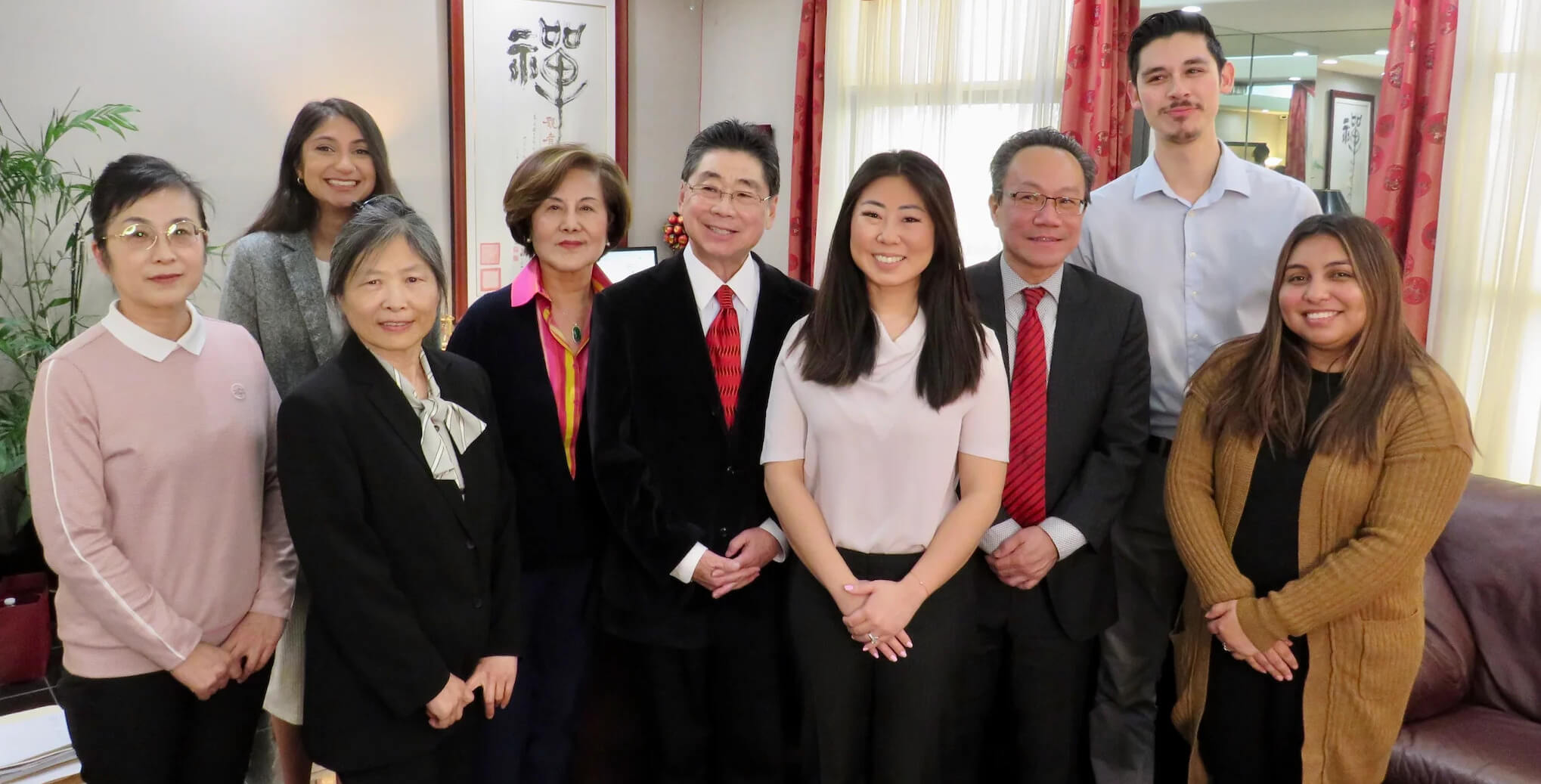

Why Choose Us?

  • Unmatched Expertise

    Trust in Peter Chu's 75+ years of collective experience to guide you through complex immigration matters.

  • Tailored Solutions

    Our personalized strategies adapt to your unique circumstances, ensuring we meet your specific immigration needs.

  • Proven Success

    Benefit from our solid track record in achieving favorable outcomes in various immigration cases across San Diego.

  • Dedicated Service

    Experience our client-first approach that ensures constant support and guidance throughout your immigration journey.

Stanton, a compact West Texas community in Martin County with a population near 2,400, serves as a hub for oil and gas industry workers whose families often navigate complex immigration timelines when a U.S. citizen spouse seeks to bring their foreign national partner stateside. For Stanton, TX residents filing K-3 spouse visa petitions, the difference between a 6-month reunion and an 18-month separation often comes down to whether the I-129F petition included properly translated civil documents and met USCIS formatting rules before submission. Law office of Peter Darwin Chu has guided Texas families through K-3 and spousal immigration processes with a focus on accuracy, compliance, and minimizing processing delays that can stretch family separations indefinitely.

Book a Consultation

Law office of Peter Darwin Chu provides k-3 attorney stanton services to Stanton, TX residents. Offering licensed immigration representation for K-3 spouse visa petitions, I-129F filings, and consular processing coordination with same-week consultation availability. We serve clients throughout Martin County and surrounding West Texas communities, ensuring every petition meets USCIS documentary standards and procedural requirements that determine approval timelines.

K-3 Attorney Stanton Services Available Across Stanton and Surrounding Communities

Law office of Peter Darwin Chu represents clients throughout Stanton, TX, zip code 79782, and the surrounding Martin County area. Including nearby communities in Midland, Big Spring, and Odessa. All immigration work is handled by Texas-licensed counsel familiar with the USCIS Texas Service Center processing procedures and consular post requirements in common visa interview jurisdictions for West Texas families.

What Stanton Residents Access Through Our Immigration Practice

K-3 Spouse Visa Petition Preparation

The K-3 visa allows a foreign national spouse of a U.S. citizen to enter the United States while their immigrant visa petition (I-130) is pending, reducing separation time during the often lengthy permanent residency process. For Stanton families where one spouse works in the Permian Basin oil fields, this expedited pathway can mean the difference between a prolonged international separation and maintaining household stability during the green card wait. We prepare the I-129F petition, compile required civil documents, coordinate translation and authentication, and ensure filing meets current USCIS formatting rules. Stanton clients receive step-by-step guidance on gathering financial evidence, marriage documentation, and affidavit support.

K-3 Spouse Visa Consular Processing Coordination

Once USCIS approves the I-129F petition, the National Visa Center transfers the case to the U.S. consulate in your spouse's home country for visa interview scheduling. We coordinate document submission to the consulate, prepare your spouse for the interview with jurisdiction-specific guidance, and address any Requests for Evidence or administrative processing delays. Many Stanton residents have family members interviewing at consulates in Mexico City, Ciudad Juarez, or Manila. Each with distinct procedural quirks and documentary preferences we address before the interview date. A poorly prepared consular interview can result in refusal, additional evidence requests, or months of administrative processing that restart the timeline.

I-130 Immigrant Petition Support

Because the K-3 visa is a nonimmigrant category that allows entry while the I-130 immigrant petition is pending, we also prepare and file the underlying I-130 petition that establishes the qualifying family relationship. If the I-130 is approved before the K-3 interview, USCIS and the consulate will typically process the immigrant visa (CR-1/IR-1) instead. Often a faster path to permanent residency. We evaluate both timelines, advise on whether dual filing makes strategic sense for your family, and ensure both petitions are prepared with consistent evidence to avoid contradictions that trigger USCIS scrutiny.

Related Immigration Services for Stanton Families

We also handle IR-1 Spouse Visa petitions for clients who prefer the direct immigrant visa route, J-1 Visa Attorney services for cultural exchange visitors, and Citizenship Attorney In San Marcos Ca representation for naturalization. Providing Stanton residents with comprehensive family-based and employment-based immigration counsel.

Get clear, expert legal guidance tailored to your visa, green card, or citizenship needs.

Licensed Immigration Representation Serving Stanton, TX

Law office of Peter Darwin Chu maintains all required Texas state bar licenses and professional liability insurance, adhering to Texas Disciplinary Rules of Professional Conduct Rule 1.01 (competence) and Rule 1.03 (communication with clients). We do not delegate substantive legal work to paralegals or unlicensed assistants, and every petition filed on behalf of a Stanton client is reviewed by licensed counsel before submission. Immigration fraud and unauthorized practice of immigration law are federal offenses under 18 U.S.C. § 1546. Working with a licensed attorney ensures your case is handled ethically, competently, and in compliance with USCIS and State Department regulations that govern K-3 spouse visa processing.

Inquire now to check if you qualify

What if my spouse is already in the United States on a tourist visa when we decide to file for a K-3 in Stanton?

If your foreign national spouse is already in the U.S. on a B-1/B-2 tourist visa or under the Visa Waiver Program when you marry, filing a K-3 petition is procedurally unnecessary. Your spouse can file for adjustment of status (Form I-485) based on the approved I-130 immigrant petition without leaving the country. The K-3 visa exists to allow entry while the I-130 is pending; if your spouse is already present, adjustment of status is the faster, more direct path to a green card. However, entering the U.S. on a tourist visa with preconceived intent to marry and adjust status constitutes visa fraud and can result in denial and a finding of inadmissibility. Stanton residents in this situation should consult an immigration attorney before taking any filing action to determine whether adjustment is appropriate or whether departure and consular processing is required to avoid fraud findings.

What if USCIS requests additional evidence after we file our K-3 petition from Stanton?

USCIS issues Requests for Evidence (RFEs) when the initial petition lacks required documentation, contains inconsistencies, or raises questions about the bona fides of the marriage. Common RFE triggers in K-3 cases include missing civil documents (marriage certificate, divorce decrees from prior marriages, birth certificates), insufficient financial evidence showing the U.S. spouse can support the foreign spouse above 125% of the federal poverty guideline, or lack of evidence demonstrating a genuine marital relationship. You typically have 87 days from the RFE notice date to respond with the requested documents. Failure to respond, or submission of incomplete evidence, results in denial of the petition. For Stanton clients, we prepare a comprehensive RFE response package that directly addresses each USCIS concern, provides certified translations where required, and includes a cover letter that organizes the evidence for adjudicator review.

What if my spouse's home country consulate is experiencing significant visa appointment delays?

Consular appointment backlogs. Particularly severe at high-volume posts like Manila, Mexico City, and Ciudad Juarez. Can delay K-3 visa interviews by 6–12 months even after USCIS approves the I-129F petition. Some Stanton families explore requesting an expedited appointment based on emergency circumstances (serious illness, urgent family need), though these requests are granted sparingly and require substantial documentation. Another strategy is concurrent I-130 processing: if the immigrant visa petition is approved before the K-3 interview, the consulate will process the immigrant visa (CR-1/IR-1) instead, often with shorter wait times depending on the post. We monitor both case timelines, advise on expedition request viability, and coordinate with the National Visa Center to ensure your case is positioned for the earliest available interview slot at the relevant consulate.

What if we filed the I-130 and K-3 petitions simultaneously but the I-130 was approved first?

When the I-130 immigrant petition is approved before the K-3 nonimmigrant petition reaches the consular interview stage, U.S. consulates will generally process the immigrant visa (CR-1 or IR-1) instead of the K-3. This is often a better outcome for Stanton families: the CR-1/IR-1 grants immediate permanent residency upon entry, eliminating the need for a later adjustment of status filing and associated fees. The K-3 visa, by contrast, grants temporary status and requires adjustment after entry. If your case is in this position, the consulate will send instructions for immigrant visa processing. No separate action is required from you. The consulate makes the determination based on petition approval dates. We coordinate with the National Visa Center to ensure all required immigrant visa documentation is submitted promptly once the I-130 approval triggers the procedural switch.

Why Stanton Families Choose Licensed Immigration Counsel Over DIY Filing or Notarios

When a U.S. citizen in Stanton decides to bring a foreign spouse to Texas, three paths are commonly considered: DIY petition filing using USCIS forms and instructions, hiring a notario público or visa consultant, or retaining a licensed immigration attorney. Here's the honest answer: USCIS does not provide legal advice, notarios públicos are not attorneys and cannot provide immigration legal services under Texas law, and visa consultants operate in an unregulated gray market where accountability is minimal. Licensed immigration attorneys are bound by state bar ethical rules, carry malpractice insurance, and face professional discipline for incompetence or misconduct. Protections that do not exist in the notario or consultant space.

Filing MethodCostLegal AccountabilityRFE Response QualityConsular CoordinationProfessional Assessment
Licensed Immigration Attorney$2,500–$5,000State bar discipline, malpractice insuranceAttorney-drafted responses citing case law and USCIS policyDirect consulate contact, interview prepBest protection against denial, fraud findings, and procedural errors
DIY USCIS Filing$535 filing fee onlyNone. You bear all riskLimited to your own researchNone. You coordinate aloneViable only if case is simple, marriage is clearly bona fide, no prior immigration violations
Notario or Visa Consultant$800–$1,500None in most states; unauthorized practice of law if they provide legal adviceOften template-based, no legal analysisMinimal or noneHigh risk. Notarios cannot provide legal advice under Texas law; errors are your liability
Online Form Prep Services$200–$600 + filing feesTerms of service disclaim liabilityNone. Service does not respond to RFEsNoneClerical aid only; no legal judgment, no representation if USCIS questions arise

The K-3 visa process is not a simple form submission. It involves legal judgments about timing, dual filing strategy, financial evidence sufficiency, and fraud risk mitigation that only a licensed attorney can competently provide. For Stanton families where a denial or delay can mean months or years of continued separation, the marginal cost of licensed counsel is a fraction of the cost of a refused visa or a finding of inadmissibility that bars future entry.

Get in touch

Frequently Asked Questions

Find answers to common questions about our services

  • K-3 processing time depends on three sequential stages: USCIS I-129F petition adjudication (currently 6–12 months at the Texas Service Center), National Visa Center case processing (2–4 months), and consular interview scheduling and adjudication (3–12 mon

  • Yes. K-3 visa holders are eligible to apply for employment authorization (Form I-765) immediately upon entry to the United States. USCIS typically adjudicates I-765 applications within 3–5 months, though expedited processing is available in certain circum

  • A K-3 petition requires: a completed Form I-129F, a copy of the marriage certificate, copies of passports for both spouses, evidence of the U.S. spouse's citizenship (birth certificate, passport, or naturalization certificate), proof that any prior marria

  • If your marriage is less than two years old at the time your spouse enters the United States on a K-3 visa and later adjusts status, USCIS will issue a conditional green card (Form I-551 with a two-year validity period) rather than a permanent green card.

  • If your foreign spouse previously overstayed a U.S. visa, they may be subject to unlawful presence bars under INA Section 212(a)(9)(B): overstays of 180–364 days trigger a three-year bar, and overstays of 365+ days trigger a ten-year bar upon departure fr

  • The K-3 visa is a nonimmigrant visa that allows your foreign spouse to enter the U.S. while the I-130 immigrant petition is pending; upon entry, your spouse must file for adjustment of status (I-485) to obtain a green card. The CR-1 (or IR-1) visa is an i

  • USCIS does not require attorney representation for K-3 petitions, and many couples successfully file pro se (self-represented). However, immigration petitions are legal proceedings where procedural errors, missing evidence, or inconsistent statements can

  • After USCIS approves the I-129F petition, the case is transferred to the National Visa Center (NVC), which serves as an intermediary between USCIS and the U.S. consulate where your spouse will interview. The NVC assigns a case number, invoices visa fees,

Need Personalized Immigration Guidance?

Law office of Peter Darwin Chu provides k-3 attorney stanton representation to Stanton, TX residents through licensed immigration counsel, same-week consultations, and comprehensive I-129F petition preparation that addresses USCIS documentary and procedural requirements specific to spousal visa cases.

Related Immigration Services for West Texas Families

Stanton residents navigating family-based immigration often benefit from our related practice areas: we handle IR-1 Spouse Visa petitions for clients who prefer the direct immigrant visa route without the K-3 intermediate step, Citizenship Attorney In San Marcos Ca services for naturalization once permanent residency is obtained, and J-1 Visa Attorney representation for cultural exchange visitors transitioning to other visa categories. For clients throughout Martin County and the Permian Basin, we provide end-to-end immigration representation from initial petition filing through permanent residency, citizenship, and family reunification. Our Our Law Firm page provides additional background on our Texas-licensed immigration team, and our Immigrant Visas overview explains the full range of family-based and employment-based permanent residency pathways available to Stanton families.

Speak With Us Today