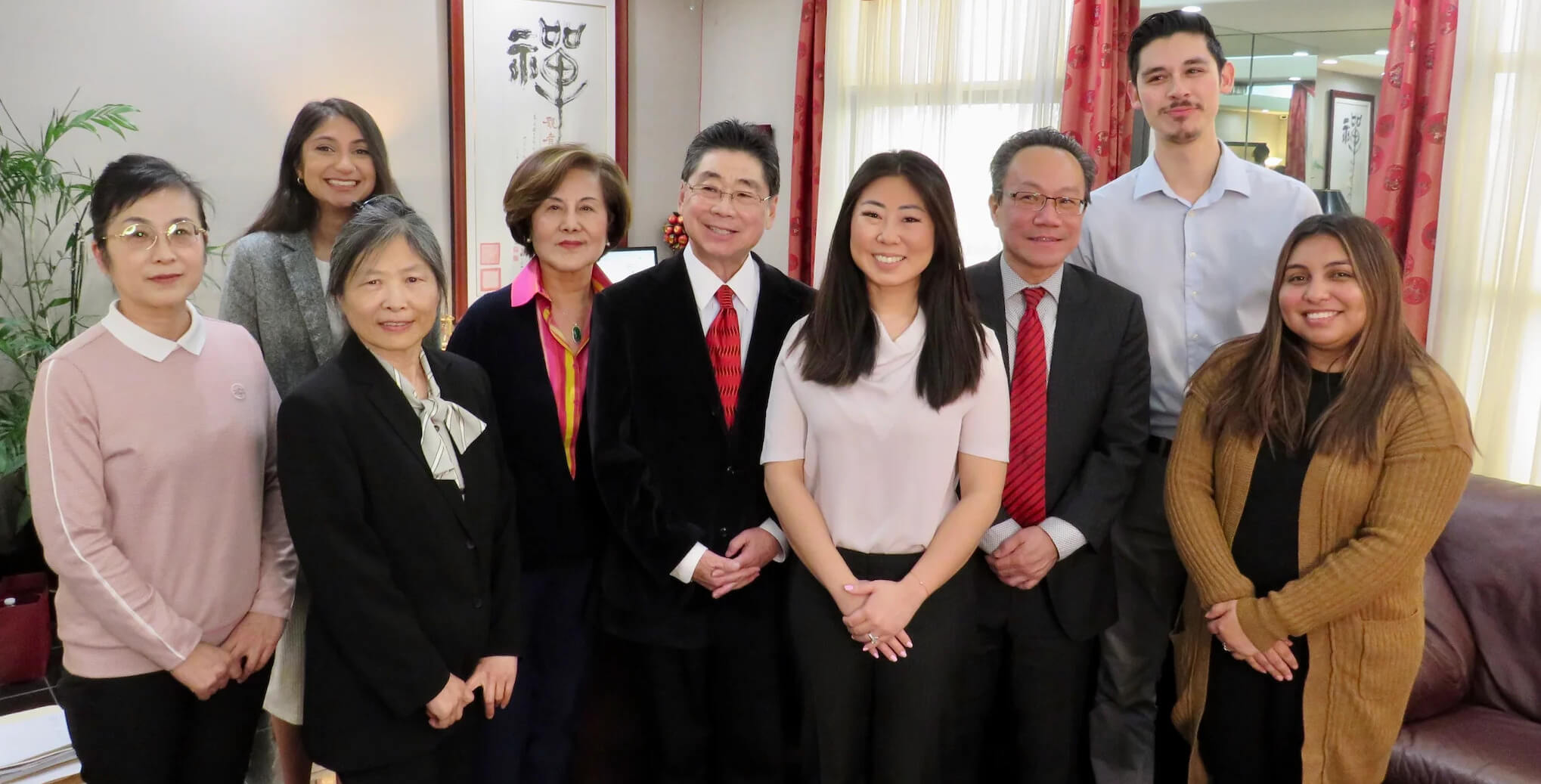

Why Choose Us?

  • Unmatched Expertise

    Trust in Peter Chu's 75+ years of collective experience to guide you through complex immigration matters.

  • Tailored Solutions

    Our personalized strategies adapt to your unique circumstances, ensuring we meet your specific immigration needs.

  • Proven Success

    Benefit from our solid track record in achieving favorable outcomes in various immigration cases across San Diego.

  • Dedicated Service

    Experience our client-first approach that ensures constant support and guidance throughout your immigration journey.

Contra Costa County, home to Walnut Creek, processed over 2,400 family-based immigration petitions in 2025, making it one of the Bay Area's most active venues for spousal reunification cases. For Walnut Creek, CA residents navigating K-3 spouse visa applications, the difference between a smooth approval and months of administrative delay often comes down to whether Form I-129F and supporting evidence were prepared correctly before submission. Law Office of Peter Darwin Chu has guided California couples through the K-3 attorney Walnut Creek process with a track record of complete documentation and compliance with USCIS technical requirements.

Book a Consultation

Law Office of Peter Darwin Chu provides K-3 attorney Walnut Creek services to California residents and couples. Licensed California immigration attorneys serving Contra Costa County with K-3 spouse visa petitions, I-129F filing, consular processing support, and adjustment of status guidance. Our firm specializes in reuniting U.S. citizen petitioners with their foreign national spouses through accelerated K-3 processing, offering same-week consultation availability and full case management from petition filing through visa interview preparation.

K-3 Attorney Walnut Creek Available Across Walnut Creek and Surrounding Areas

Law Office of Peter Darwin Chu serves clients throughout Walnut Creek, CA and Contra Costa County. Including Ygnacio Valley, Rossmoor, and Northgate neighborhoods (zip codes 94595, 94596, 94597, 94598). With K-3 spouse visa representation. All California residents with pending or planned spousal immigration petitions are eligible for consultation regardless of county, and our attorneys handle cases originating from consular posts worldwide.

What Walnut Creek Residents Can Access

K-3 Spouse Visa Petition Filing

The K-3 visa allows the foreign national spouse of a U.S. citizen to enter the United States while waiting for approval of an immigrant visa petition (Form I-130). Our Walnut Creek immigration attorney prepares and files Form I-129F (Petition for Alien Fiancé(e)) after the underlying I-130 has been filed, compiles required documentation including marriage certificates and proof of bona fide marriage, and coordinates National Visa Center processing. For Walnut Creek couples where the U.S. citizen spouse needs their partner in California before the I-130 is approved, the K-3 pathway can reduce separation time by 6–12 months compared to consular processing alone.

Consular Interview Preparation and Support

Once USCIS approves the I-129F petition, the case transfers to the U.S. consulate in the foreign spouse's home country for visa interview and issuance. We provide complete consular preparation including document checklists specific to the consular post, mock interview coaching, guidance on financial sponsorship requirements, and post-approval entry planning. Walnut Creek petitioners benefit from our familiarity with consular practices at high-volume posts in Mexico, the Philippines, India, and China. The four countries accounting for over 60% of K-3 visa walnut creek applications.

Adjustment of Status After K-3 Entry

After the K-3 visa holder enters the United States, they must file Form I-485 (Application to Register Permanent Residence or Adjust Status) to obtain a green card. Our firm manages the entire adjustment process including work authorization (Form I-765) and advance parole (Form I-131) applications, preparation for USCIS interviews, and response to Requests for Evidence. This ensures Walnut Creek couples move seamlessly from temporary K-3 status to permanent residence without procedural gaps that could delay work authorization or travel rights.

Get clear, expert legal guidance tailored to your visa, green card, or citizenship needs.

Licensed California Immigration Representation You Can Verify

Law Office of Peter Darwin Chu maintains all required California State Bar licenses and operates in full compliance with California Business and Professions Code § 6125 governing the unauthorized practice of immigration law. Our attorneys adhere to American Immigration Lawyers Association (AILA) ethical standards and maintain active memberships that provide access to liaison channels with USCIS California Service Center and San Francisco Field Office. Every K-3 spouse visa Walnut Creek case is handled by a licensed attorney. Not a paralegal or notario. Ensuring that all representations to USCIS and consular officers meet Rules of Professional Conduct standards for competence and diligence.

Inquire now to check if you qualify

What if my I-130 petition is still pending in Walnut Creek — can I still file for a K-3 visa?

Yes. The K-3 visa is specifically designed for situations where the I-130 immigrant petition is pending but not yet approved. To qualify for K-3 processing in Walnut Creek, the U.S. citizen petitioner must have already filed Form I-130 with USCIS and received a receipt notice confirming acceptance. Once the I-130 receipt is in hand, you can immediately file Form I-129F to initiate K-3 processing, even if the I-130 has not been adjudicated. The advantage for Walnut Creek couples is that the foreign spouse can potentially enter the U.S. on a K-3 visa months before the I-130 would normally be approved, reducing separation time. However, if the I-130 is approved before the K-3 visa is issued, consular processing typically shifts to the immigrant visa (CR-1/IR-1) pathway automatically. An immigration attorney in Walnut Creek evaluates which pathway is faster based on current USCIS processing times and the specific consular post involved.

What if my spouse is from a country with long visa wait times — does the K-3 help in Walnut Creek?

The K-3 visa can significantly accelerate reunification for Walnut Creek couples when the foreign spouse is from a country with consular backlogs or extended I-130 processing times. Countries like the Philippines, India, Mexico, and China often experience 12–18 month I-130 adjudication delays due to high petition volume. By filing the K-3 petition concurrently, the foreign spouse may be able to attend a consular interview and receive a K-3 visa within 6–9 months of I-129F approval. Well before the underlying I-130 is finalized. However, recent USCIS policy changes have reduced the practical speed advantage of K-3 processing in some cases, as consular posts now prioritize immigrant visa interviews over nonimmigrant K-3 interviews when both are pending. Walnut Creek petitioners should consult an attorney to compare current processing timelines for K-3 versus direct consular processing based on the spouse's home country.

What if my K-3 visa expires before we complete adjustment of status in Walnut Creek?

The K-3 visa itself is valid for 2 years from the date of issuance, but K-3 status inside the United States is maintained as long as the adjustment of status application (Form I-485) remains pending. If your I-485 is filed before the K-3 status expires, you remain in lawful status even if adjudication takes longer than 2 years. A common scenario in Walnut Creek cases filed at the San Francisco USCIS Field Office. However, if you need to travel outside the U.S. while the I-485 is pending, you must obtain advance parole (Form I-131 approval) before departure, as leaving without it will abandon the adjustment application. Work authorization under K-3 status also requires filing Form I-765 (Employment Authorization Document) separately. An immigration attorney Walnut Creek ensures all ancillary applications are filed on time to maintain continuous status and work/travel rights throughout the adjustment process.

What if we got married outside the U.S. — does that affect our K-3 eligibility in Walnut Creek?

No. Marriages conducted outside the United States are fully eligible for K-3 visa processing as long as the marriage is legally recognized in the country where it was performed and valid under U.S. immigration law. Walnut Creek petitioners who married abroad must provide a certified marriage certificate from the foreign jurisdiction, translated into English by a certified translator if the original is in another language, and an affidavit or proof that any prior marriages were legally terminated by divorce or death. USCIS does not require couples to have married in the U.S. or to have lived together after marriage to qualify for K-3 processing. However, USCIS scrutinizes foreign marriages for fraud indicators. Particularly marriages conducted shortly before petition filing or in countries known for marriage-visa schemes. So Walnut Creek couples benefit from presenting evidence of a bona fide relationship including photos, correspondence, joint financial accounts, and proof of in-person meetings.

K-3 Visa vs. CR-1 Immigrant Visa: Which Path Is Right for Walnut Creek Couples?

Walnut Creek petitioners frequently ask whether to pursue a K-3 nonimmigrant spouse visa or proceed directly with CR-1/IR-1 immigrant visa consular processing. Both pathways reunite married couples, but they differ in processing time, work authorization, and green card issuance. Here's the honest answer: The K-3 visa was designed to accelerate spousal reunification when I-130 processing took 18–24 months, but recent USCIS efficiency improvements have reduced I-130 approval times to 10–14 months in many cases, narrowing the K-3 speed advantage. For Walnut Creek couples where the foreign spouse needs to enter the U.S. as quickly as possible. And can accept the complexity of filing both I-129F and I-485 after entry. The K-3 remains a viable option. However, if the I-130 is likely to be approved within 12 months and the couple can tolerate the separation, direct consular processing for a CR-1 immigrant visa results in the foreign spouse receiving a green card immediately upon U.S. entry, eliminating the need for adjustment of status filing and associated costs.

FactorK-3 Visa (Walnut Creek)CR-1 Immigrant VisaProfessional Assessment
Entry Timeline6–12 months after I-129F filing (if approved before I-130)12–18 months (after I-130 approval + consular processing)K-3 faster only if I-130 is significantly delayed
Work AuthorizationRequires separate I-765 filing after U.S. entry; 3–5 month waitAuthorized immediately upon entry with immigrant visaCR-1 provides immediate work rights
Green Card IssuanceMust file I-485 adjustment of status after entry ($1,140+ fee)Green card issued at port of entry; no adjustment neededCR-1 eliminates adjustment cost and delay
Travel FlexibilityRequires advance parole approval to travel during adjustmentUnrestricted travel with green card in handCR-1 offers greater mobility from day one

Get in touch

Frequently Asked Questions

Find answers to common questions about our services

  • Current K-3 visa processing for Walnut Creek petitioners averages 9–14 months from I-129F filing to consular interview, though timelines vary significantly by consular post. USCIS California Service Center, which adjudicates I-129F petitions for Walnut Cr

  • A K-3 petition filed from Walnut Creek requires Form I-129F completed and signed by the U.S. citizen petitioner, a copy of the I-130 receipt notice proving the immigrant petition was already filed, a certified copy of the marriage certificate with English

  • A K-3 visa holder cannot work in Walnut Creek or anywhere in the United States until they receive an Employment Authorization Document (EAD) by filing Form I-765 after entry. The I-765 application is filed concurrently with or immediately after filing For

  • If USCIS denies the I-129F petition for a K-3 visa, the denial notice will specify the reason. Common grounds include failure to prove a bona fide marriage, missing documentation, or prior immigration violations by the foreign spouse. Walnut Creek petitio

  • If your spouse is already in Walnut Creek on a valid nonimmigrant visa (such as a tourist B-2, student F-1, or work visa H-1B), you generally should not file for a K-3 visa. Instead, you should file Form I-485 to adjust their status to permanent resident

  • The total cost for K-3 spouse visa processing for Walnut Creek residents includes USCIS filing fees, consular fees, and legal representation. As of 2026, the I-129F petition filing fee is $535, the DS-160 nonimmigrant visa application fee is $185, and the

  • The K-3 visa is for spouses of U.S. citizens who are already legally married and waiting for approval of an immigrant visa petition, while the K-1 fiancé visa is for engaged couples who plan to marry within 90 days of the foreign fiancé's entry into the U

  • Yes. Unmarried children under age 21 of the K-3 visa holder can apply for K-4 derivative visas and accompany or follow to join the parent in Walnut Creek. The K-4 visa is tied to the K-3 principal's status, so if the K-3 visa is approved, the children are

Need Personalized Immigration Guidance?

Law Office of Peter Darwin Chu provides K-3 attorney Walnut Creek services to California couples seeking spouse visa reunification. Offering same-week consultation scheduling, complete I-129F petition preparation, consular interview coaching, and adjustment of status management for Contra Costa County residents.

Related Immigration Services for Walnut Creek Residents

Law Office of Peter Darwin Chu offers comprehensive family-based immigration representation beyond K-3 spouse visas. Walnut Creek clients with immediate relative petitions may also benefit from our IR-1 Spouse Visa services for couples married over two years, or explore our Citizenship guidance for green card holders ready to naturalize. For clients with employment-based visa needs, we provide J-1 Visa Attorney services and coordinate K-3 filings with pending employment petitions when dual-intent strategies are appropriate. Families in Northern California communities can access the same level of service through our offices serving neighboring regions.

Speak With Us Today