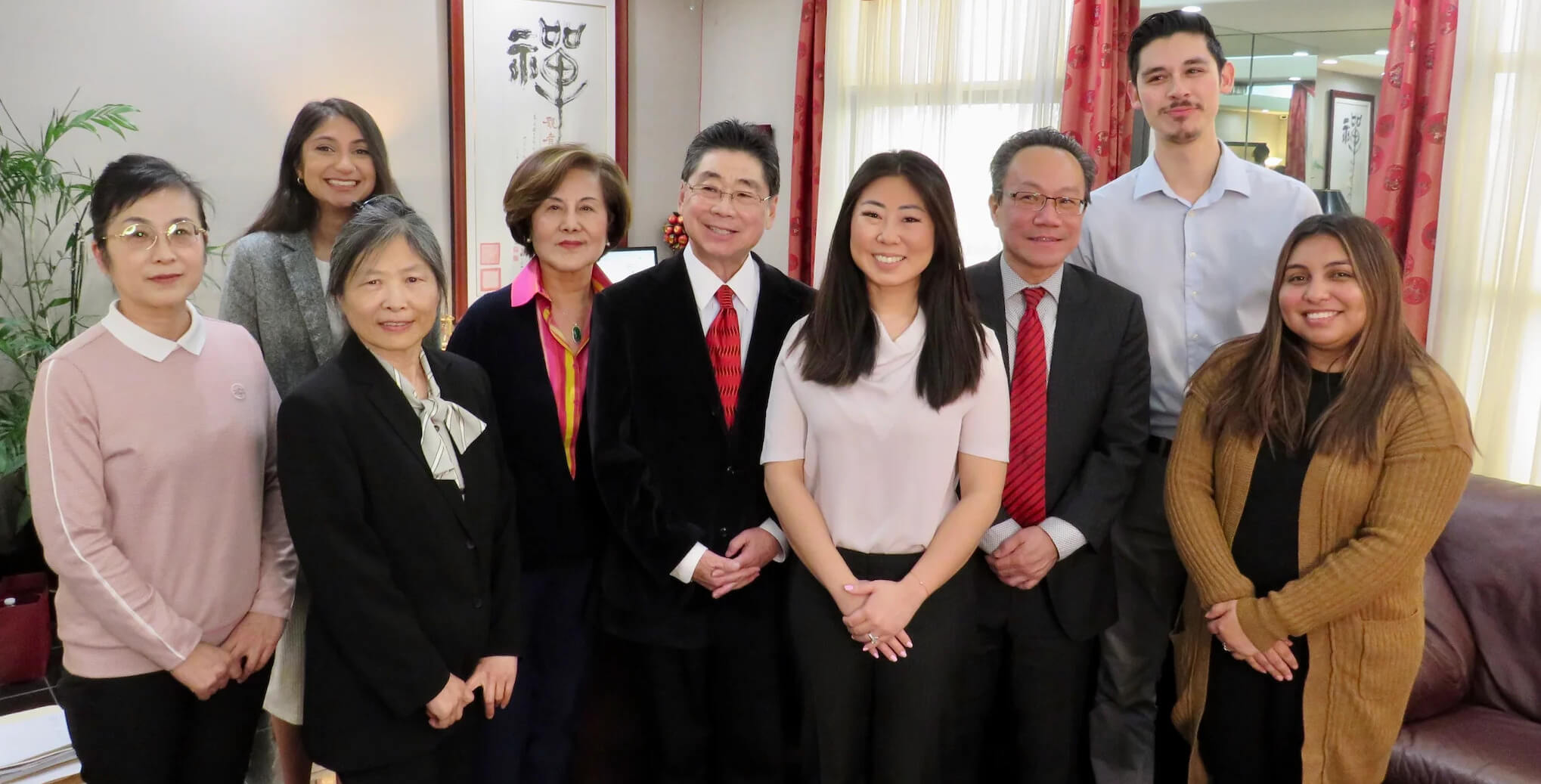

Why Choose Us?

  • Unmatched Expertise

    Trust in Peter Chu's 75+ years of collective experience to guide you through complex immigration matters.

  • Tailored Solutions

    Our personalized strategies adapt to your unique circumstances, ensuring we meet your specific immigration needs.

  • Proven Success

    Benefit from our solid track record in achieving favorable outcomes in various immigration cases across San Diego.

  • Dedicated Service

    Experience our client-first approach that ensures constant support and guidance throughout your immigration journey.

Chino, CA is home to over 91,000 residents, many from immigrant families navigating complex visa timelines that determine when a spouse can join them in California. For Chino families waiting through K-3 spouse visa processing. An interim visa category designed to reduce separation during the CR-1/IR-1 process. The difference between months of delay and efficient processing often comes down to a single filing error or missed deadline. Law office of Peter Darwin Chu has served Southern California since its founding, with immigration attorneys licensed to practice before USCIS and specializing in family-based visa strategies that address the procedural demands of K-3 applications filed from Chino.

Book a Consultation

Law office of Peter Darwin Chu provides k-3 lawyer chino services to residents throughout Chino, CA. Licensed California immigration attorneys handling K-3 spouse visa petitions, consular processing coordination, and adjustment of status filings for families across San Bernardino County. We offer in-person consultations at our office and remote case management for all Chino zip codes, ensuring every K-3 application is filed correctly the first time.

K-3 Lawyer Chino Available Across Chino and Surrounding Areas

Law office of Peter Darwin Chu represents K-3 spouse visa applicants throughout Chino, including neighborhoods near Chino Hills Parkway, downtown Chino near Central Avenue, and residential areas surrounding Prado Regional Park. Serving zip codes 91708, 91709, and 91710 across San Bernardino County, CA. All immigration work is handled by attorneys admitted to practice in California and authorized to file petitions with USCIS on behalf of Chino families.

What Chino Residents Can Access

K-3 Spouse Visa Petition (Form I-129F)

The K-3 visa allows the foreign spouse of a U.S. citizen to enter the United States while the immigrant visa petition (Form I-130) is pending. Reducing separation time from 12–18 months to as little as 6–9 months depending on consular processing backlogs. Filing a K-3 requires that the I-130 petition already be filed and received by USCIS, and the I-129F must be submitted to the same service center. For Chino families where the petitioning spouse is a U.S. citizen and the beneficiary spouse is abroad, the K-3 provides work authorization and travel flexibility unavailable through consular processing alone. Our k-3 lawyer chino team prepares the I-129F petition, compiles supporting evidence of the marital relationship, and coordinates timing with your pending I-130 to maximize approval speed.

Consular Processing Coordination

Once USCIS approves the I-129F, the case transfers to the National Visa Center and then to the U.S. consulate in the beneficiary spouse's home country. Consular processing for K-3 applicants involves DS-160 online application, consular interview scheduling, medical examination, and submission of civil documents. All governed by country-specific procedures that vary widely. We provide step-by-step guidance through this phase, prepare consular interview coaching, and coordinate with the consulate to resolve any requests for additional evidence before the interview date.

Adjustment of Status After K-3 Entry

K-3 visa holders enter the U.S. in K-3 status and must file Form I-485 (Application to Register Permanent Residence) once the underlying I-130 petition is approved. This adjustment of status process converts K-3 nonimmigrant status to lawful permanent resident (green card) status without requiring the spouse to return to their home country. Our immigration lawyer chino team handles I-485 preparation, employment authorization (Form I-765) and travel document (Form I-131) filings, and representation at USCIS adjustment interviews to ensure the transition from K-3 to permanent residency proceeds without delay.

Get clear, expert legal guidance tailored to your visa, green card, or citizenship needs.

Licensed Immigration Representation You Can Trust

Law office of Peter Darwin Chu maintains active membership in the California State Bar and is authorized to practice immigration law before U.S. Citizenship and Immigration Services, the Executive Office for Immigration Review, and federal immigration courts. We comply with all California Rules of Professional Conduct governing attorney-client privilege, conflict of interest disclosure, and fee transparency. Every K-3 spouse visa client receives a written retainer agreement specifying scope of work, fee structure, and costs before representation begins. Our Chino-area clients benefit from decades of combined immigration experience and direct access to attorneys who personally review every I-129F petition filed from this office.

Inquire now to check if you qualify

What if my spouse's I-130 petition has been pending for over a year — can I still file a K-3 visa in Chino?

Yes. The K-3 visa exists specifically for cases where the I-130 has been pending long enough to justify interim relief. To file Form I-129F for K-3 status, the underlying I-130 must have been filed and received by USCIS, but it does not need to be approved yet. In fact, K-3 is most beneficial when I-130 processing is slow. However, if your I-130 is already approved and your priority date is current, consular processing of the immigrant visa (CR-1 or IR-1) may be faster than K-3 processing. Our k-3 lawyer chino team evaluates both timelines and recommends the faster path based on current USCIS and consular backlogs at your spouse's home country post.

What if my K-3 spouse visa is denied at the consular interview in Chino's jurisdiction?

K-3 visa denials at the consular interview typically result from one of three issues: failure to demonstrate a bona fide marriage, inadmissibility grounds (such as prior immigration violations or criminal history), or incomplete civil documents. If the consulate denies the K-3, you receive a written explanation citing the grounds for denial under Section 212(a) of the Immigration and Nationality Act. In most cases, the denial can be overcome by filing a waiver (such as Form I-601 for unlawful presence or criminal grounds) or by submitting additional evidence of the marital relationship. Our Chino immigration attorneys review the consular denial notice, determine whether the case is eligible for reconsideration or waiver, and coordinate reapplication strategy. Including whether to abandon K-3 and proceed directly with CR-1/IR-1 consular processing instead.

What if I need to travel outside the U.S. after my K-3 spouse enters but before we file for adjustment of status in Chino?

K-3 visa holders are admitted in K-3 nonimmigrant status, which is a dual-intent visa. Meaning travel in and out of the U.S. is permitted without abandoning the intent to adjust status, provided the K-3 visa remains valid and the traveler presents the K-3 visa and valid passport at the port of entry. However, if you file Form I-485 (adjustment of status) and then travel internationally without first obtaining advance parole (Form I-131), USCIS considers the I-485 abandoned and your case is terminated. For Chino families where the K-3 spouse needs to travel for family emergencies or work obligations after entering the U.S., we file Form I-131 concurrently with the I-485 to secure advance parole before any international travel occurs.

What if USCIS approves my I-130 before my K-3 visa interview — should I still proceed with K-3 in Chino?

If USCIS approves the I-130 before the K-3 consular interview, the consulate typically converts the case to CR-1/IR-1 immigrant visa processing rather than issuing a K-3 nonimmigrant visa. Because the immigrant visa confers immediate permanent resident status upon entry, while K-3 requires a subsequent adjustment of status filing. In this scenario, the K-3 petition has served its purpose by accelerating the I-130 review, and the consulate proceeds with the faster immigrant visa path. Our k-3 spouse visa chino practice routinely files I-129F for K-3 even when I-130 approval is anticipated within months, because the act of filing I-129F often triggers faster I-130 adjudication at USCIS. A procedural dynamic that benefits Chino families regardless of whether the K-3 visa is ultimately issued.

K-3 Spouse Visa Strategy: Licensed Counsel vs. DIY Filing vs. Notario Services

Chino families filing K-3 spouse visa petitions face a choice: retain a California-licensed immigration attorney, attempt DIY filing using USCIS instructions, or engage unlicensed 'notario' services advertising low-cost help. Here's the honest answer: K-3 petitions have a narrow eligibility window. They must be filed after the I-130 but before I-130 approval, they require consular coordination across multiple agencies, and a single error in Form I-129F or supporting documentation can result in a Request for Evidence that delays the case by 3–6 months or triggers an outright denial that forces the family back to the slower CR-1 consular processing track. DIY filers miss these procedural nuances because USCIS instructions do not explain timing strategy or consular-specific document requirements. Notarios. Who are not attorneys and are prohibited from providing legal advice under California Business and Professions Code Section 6125. Cannot represent you before USCIS, cannot advise on inadmissibility waivers, and cannot appear at consular interviews or adjustment interviews.

FactorLicensed Immigration AttorneyDIY FilingNotario Service
USCIS RepresentationAuthorized under 8 CFR 292.1Not availableUnauthorized practice of law
Timing StrategyEvaluates K-3 vs. CR-1 speed based on current backlogsRelies on outdated USCIS instructionsNo legal analysis provided
Waiver EligibilityFiles I-601, I-601A, I-212 as neededCannot assess inadmissibility groundsCannot provide legal advice
Professional AssessmentLicensed counsel reduces K-3 denial risk and shortens separation time. Critical when months of family separation are at stake.High risk of procedural error and RFE delays.Unlicensed and legally prohibited from immigration representation.

Get in touch

Frequently Asked Questions

Find answers to common questions about our services

  • K-3 processing time from Form I-129F filing to consular visa issuance typically ranges from 6 to 12 months, depending on USCIS service center workload and consular appointment availability at the beneficiary spouse's home country post. USCIS processing of

  • Form I-129F requires proof that the underlying I-130 petition has been filed (the I-797 receipt notice), evidence of the marital relationship (marriage certificate, joint financial documents, photographs), and the petitioner's proof of U.S. citizenship (p

  • Yes. K-3 visa holders are eligible to apply for employment authorization by filing Form I-765 (Application for Employment Authorization) after entering the United States. USCIS typically approves I-765 within 3–5 months of filing, and the Employment Autho

  • K-3 is a nonimmigrant visa that allows the foreign spouse to enter the U.S. while the I-130 immigrant petition is pending, followed by adjustment of status (Form I-485) after entry. CR-1 is an immigrant visa processed entirely at the consulate, and the fo

  • If the marriage is legally terminated (by divorce or annulment) before the K-3 spouse files Form I-485 or before USCIS approves the I-485, the basis for adjustment of status is lost and the foreign spouse falls out of lawful status. USCIS will deny the I-

  • Yes, but prior immigration violations. Such as unlawful presence, visa overstays, or prior deportation. Create inadmissibility grounds under INA Section 212(a) that must be addressed before the K-3 visa can be issued. Unlawful presence of more than 180 da

  • Attorney fees for K-3 spouse visa representation typically range from $2,500 to $5,000 depending on case complexity, whether consular processing coordination is included, and whether inadmissibility waivers are required. USCIS filing fees for Form I-129F

  • You are not legally required to retain an attorney to file Form I-129F or pursue K-3 consular processing. USCIS and the Department of State allow self-represented petitioners. However, K-3 cases involve complex timing strategy (determining whether K-3 or

Need Personalized Immigration Guidance?

Law office of Peter Darwin Chu provides licensed k-3 lawyer chino representation to families throughout Chino, CA. Offering Form I-129F petition preparation, consular processing coordination, and adjustment of status filings with same-week consultation availability for all San Bernardino County residents.

Related Immigration Services for Chino Families

Families pursuing K-3 spouse visa processing in Chino often require complementary services: IR-1 Spouse Visa representation for cases where immigrant visa processing is faster than K-3, Citizenship assistance once the foreign spouse obtains permanent residency and meets naturalization eligibility, and I-751 Lawyer San Diego services for conditional residence removal filings required two years after adjustment of status. We also handle O-1 Visa Lawyer San Diego, Expert H-1 Visa Lawyer San Diego, and E-1 Visa Lawyer San Diego cases for Chino residents with employment-based immigration needs. Every service is delivered by California-licensed attorneys with consular processing experience spanning dozens of U.S. embassies worldwide.

Speak With Us Today