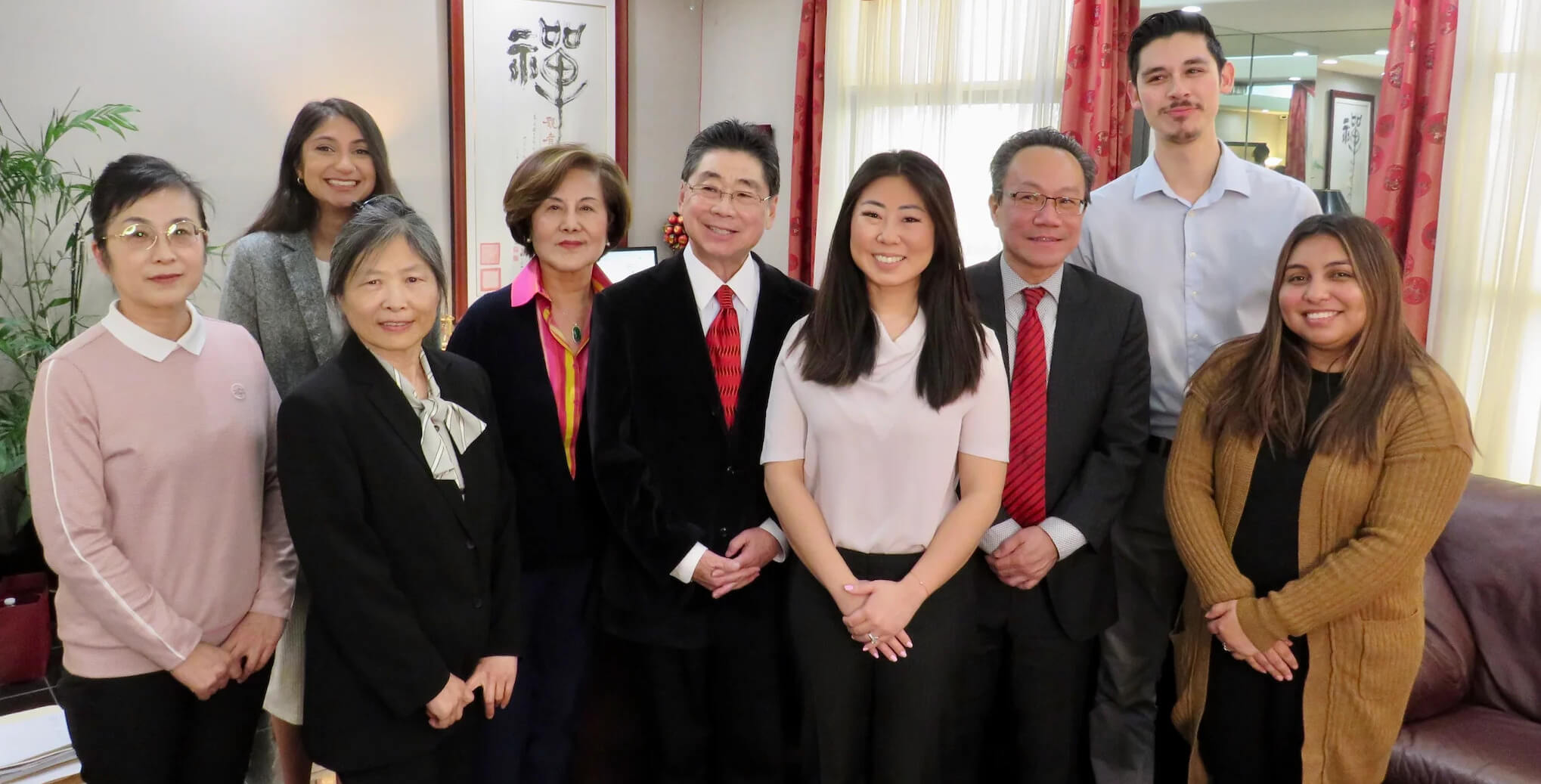

Why Choose Us?

  • Unmatched Expertise

    Trust in Peter Chu's 75+ years of collective experience to guide you through complex immigration matters.

  • Tailored Solutions

    Our personalized strategies adapt to your unique circumstances, ensuring we meet your specific immigration needs.

  • Proven Success

    Benefit from our solid track record in achieving favorable outcomes in various immigration cases across San Diego.

  • Dedicated Service

    Experience our client-first approach that ensures constant support and guidance throughout your immigration journey.

Cupertino's high concentration of H-1B and employment-based visa holders. Over 35% of the city's 60,000 residents are foreign-born according to Census data. Creates unique demand for family reunification pathways like the K-3 spouse visa. For Cupertino residents navigating the 12–18 month processing timeline between I-130 approval and immigrant visa availability, the K-3 nonimmigrant visa offers a critical bridge that allows spouses to enter the United States months earlier while the permanent residency case remains pending. Law office of Peter Darwin Chu has represented immigration clients across Santa Clara County since establishing its practice, with specific experience in K-3 cases filed through the California Service Center and consular processing in high-volume posts. We understand the procedural nuances that distinguish K-3 strategy from direct CR-1/IR-1 processing for Cupertino families.

Book a Consultation

Law office of Peter Darwin Chu provides k-3 lawyer cupertino services to Cupertino, CA residents and their foreign national spouses. Representing petitioners in I-129F filings, consular interview preparation, and K-3 to adjustment of status transitions with same-week consultation availability and bilingual case support. Our immigration practice focuses exclusively on family-based and employment visa categories, ensuring your K-3 spouse visa case receives specialized attention rather than generalist review.

K-3 Lawyer Cupertino Available Across Cupertino and Surrounding Areas

Law office of Peter Darwin Chu serves K-3 visa petitioners throughout Cupertino, CA, including residents of Monta Vista, Rancho Rinconada, and neighborhoods near De Anza College. Zip codes 95014 and 95015. We represent clients in all California Service Center jurisdiction cases and provide consular processing support for spouses interviewing at U.S. embassies worldwide, with particular experience in high-volume posts serving Asia-Pacific applicants common among Cupertino's immigrant community.

What Cupertino Residents Can Access

K-3 Spouse Visa Petition Filing

The I-129F petition for K-3 classification allows a U.S. citizen petitioner who has already filed an I-130 immigrant petition for their spouse to request nonimmigrant visa status that permits earlier entry. For Cupertino families where the I-130 has been pending more than six months, the K-3 path can reduce separation time by 8–14 months compared to waiting for immigrant visa processing to complete. We prepare the I-129F with supporting documentation that mirrors your approved I-130, coordinate with the National Visa Center to ensure both cases proceed in parallel, and monitor processing times at your spouse's consular post to optimize timing.

Consular Processing and Interview Preparation

Once USCIS approves your I-129F, the case transfers to the National Visa Center and then to the U.S. embassy or consulate where your spouse will interview for the K-3 visa. We provide country-specific guidance for document preparation, coach applicants on consular interview expectations, and address common refusal grounds before the appointment. Our Ir-1 Spouse Visa experience directly informs K-3 strategy since both pathways involve marriage-based immigration scrutiny.

Adjustment of Status After K-3 Entry

K-3 visa holders enter the U.S. in nonimmigrant status but retain the ability to adjust to lawful permanent residence once their underlying I-130 becomes current. We coordinate the transition from K-3 to green card by filing Form I-485 at the optimal point in your case timeline, ensuring work and travel authorization continuity through the adjustment process. This dual-track approach is particularly valuable for Cupertino families where both spouses work in the tech sector and cannot afford prolonged separation or employment gaps.

Get clear, expert legal guidance tailored to your visa, green card, or citizenship needs.

Licensed Immigration Representation You Can Verify

Law office of Peter Darwin Chu maintains all required California state bar licenses and malpractice insurance, operating in full compliance with American Immigration Lawyers Association (AILA) professional standards and California Rules of Professional Conduct governing attorney-client relationships. Every K-3 case is managed by a licensed attorney. Not paralegals or visa consultants. With direct access to your representation throughout the process. We provide written fee agreements that specify scope, costs, and refund terms before any retainer is collected, ensuring transparency that unlicensed immigration services cannot offer. Our immigration practice is built on the principle that family reunification cases deserve the same professional standards as corporate visa work.

Inquire now to check if you qualify

What if my I-130 petition is still pending but my spouse and I cannot tolerate additional separation time in Cupertino?

If your I-130 has been pending for at least six months, filing an I-129F for K-3 classification allows your spouse to apply for a nonimmigrant visa and enter the United States while the immigrant petition continues processing. The K-3 does not replace the I-130. It runs parallel to it. And your spouse will still need to complete adjustment of status after entry. For Cupertino couples where both partners work in time-sensitive roles or have young children, the K-3 path can reduce total separation from 18+ months to as little as 10–12 months depending on consular post processing times. The tradeoff is dual filing fees and the need to maintain K-3 status compliance until adjustment is approved.

What if my spouse's K-3 visa is about to expire before we can file for adjustment of status in Cupertino?

A K-3 visa is typically issued with two-year validity, but the status itself is tied to the pending I-130 petition. If your I-130 remains pending and your spouse's K-3 status is approaching expiration, you can file Form I-539 to extend K-3 status in two-year increments as long as the underlying immigrant petition has not been denied. The more common scenario for Cupertino families is that the I-130 becomes current well before the K-3 expires, at which point you file I-485 for adjustment and the K-3 status becomes moot. If USCIS denies the I-130, K-3 status terminates and your spouse must depart unless another status applies. Timing the adjustment filing to avoid status gaps is critical.

What if we are unsure whether K-3 or direct consular processing is faster for our Cupertino family?

The answer depends on current I-130 processing times at the California Service Center, National Visa Center case preparation timelines, and interview wait times at your spouse's consular post. As of 2026, I-130 processing for immediate relatives averages 10–14 months, and consular processing adds another 6–10 months. Filing I-129F for K-3 adds 6–8 months but allows your spouse to enter on a nonimmigrant visa while the I-130 continues processing in parallel. For Cupertino couples where the foreign spouse is in a country with short consular wait times and straightforward visa history, direct CR-1/IR-1 processing may be faster and less expensive. For couples facing long consular backlogs or where the U.S. spouse cannot travel internationally for extended periods, K-3 provides material time savings. We model both pathways with current processing data before recommending a strategy.

What if my spouse entered on K-3 but we later divorce before adjustment of status is approved in Cupertino?

K-3 status is derivative of the I-130 immigrant petition, which in turn is predicated on the validity of your marriage. If you divorce before your spouse's I-485 adjustment application is approved, the I-130 is automatically revoked and the K-3 status terminates. Your spouse would need to depart the United States or obtain another immigration status (such as a work visa or student visa) to remain lawfully. There is no waiver or exception for K-3 holders whose marriages end before adjustment. Unlike certain battered spouse provisions under VAWA that apply to other visa categories. Cupertino couples considering separation should consult an immigration attorney before filing for divorce to understand the immigration consequences and explore whether completing adjustment before divorce is feasible.

K-3 Spouse Visa Lawyer vs. DIY Filing vs. Visa Consultants

Cupertino petitioners filing I-129F for K-3 spouse visas face a choice: retain a licensed immigration attorney, attempt self-filing using USCIS forms and instructions, or hire a visa consultant or notario. Each approach carries different risk and cost profiles. Here's the honest answer: K-3 cases involve parallel petition management (I-130 and I-129F), consular coordination across NVC and embassy systems, and timing strategy that directly affects how long your spouse remains separated from you. Mistakes in any phase add months of delay and can trigger visa denials that require waiver filings or appeals. DIY filers frequently miscalculate when to file the I-129F relative to I-130 approval, submit incomplete or inconsistent documentation, or fail to respond to Requests for Evidence within the 87-day deadline. Visa consultants and notarios are not attorneys, cannot provide legal advice under California law, and offer no malpractice insurance or attorney-client privilege if the case is denied. Licensed immigration counsel costs more upfront but reduces the total time and financial cost of family separation. And provides recourse if errors occur.

| Approach | Upfront Cost | Processing Risk | Legal Recourse | Best For |
|---|---|---|---|
| Licensed K-3 Immigration Lawyer | $3,000–$5,000 | Low. Attorney reviews all filings, monitors deadlines, coordinates consular strategy | Full malpractice coverage and attorney-client privilege | Cupertino couples prioritizing speed, minimizing separation time, and ensuring first-time approval |
| DIY I-129F Filing | $535 filing fee only | High. 40%+ of pro se I-129F filers receive RFEs; consular phase errors common | None. You bear all risk of denial or delay | Petitioners with prior immigration filing experience and straightforward cases |
| Visa Consultant / Notario | $800–$1,500 | Very High. Unauthorized practice of law; no legal accountability; frequent documentation errors | None. Consultants are unregulated and uninsured | Not recommended for K-3 cases |

Get in touch

Frequently Asked Questions

Find answers to common questions about our services

  • K-3 processing involves three sequential phases: USCIS adjudication of Form I-129F (currently 6–8 months at California Service Center), National Visa Center case preparation (2–3 months), and consular interview scheduling and visa issuance (1–4 months dep

  • No. K-3 visa holders must apply for work authorization by filing Form I-765 after entry into the United States. USCIS currently processes I-765 employment authorization applications in 3–5 months, meaning your spouse will not be able to work legally durin

  • K-3 is a nonimmigrant visa that allows your spouse to enter the U.S. while the I-130 immigrant petition is still pending, requiring subsequent adjustment of status after entry. CR-1 (or IR-1 for marriages over two years old) is an immigrant visa issued af

  • If your I-130 is already fully approved and your priority date is current, filing for K-3 is usually unnecessary. Your spouse should proceed directly to consular processing for an immigrant visa (CR-1 or IR-1), which confers permanent residence immediatel

  • Yes. Unmarried children under 21 of the K-3 principal applicant may qualify for K-4 derivative visas, which are processed simultaneously with the K-3 case. The children must be listed on the I-129F petition and meet the Child Status Protection Act age req

  • If USCIS denies your I-129F, you will receive a written denial notice specifying the reason. Common grounds include failure to demonstrate a valid underlying I-130, inability to prove the bona fides of the marriage, or petitioner ineligibility (such as fa

  • Attorney fees for full-service K-3 representation. Including I-129F preparation, consular processing coordination, and adjustment of status filing after entry. Typically range from $3,000 to $5,000 for Cupertino immigration cases, depending on case comple

  • No. K-1 fiancé visa processing is generally faster because it involves a single petition (I-129F for K-1) rather than the dual-track I-130 plus I-129F process required for K-3. Current K-1 processing averages 8–12 months from filing to visa issuance, whil

Need Personalized Immigration Guidance?

Law office of Peter Darwin Chu provides k-3 lawyer cupertino services to Cupertino families through licensed California immigration attorneys specializing in spouse visa petitions, with same-week consultations and comprehensive case management from I-129F filing through consular processing and adjustment of status.

Related Immigration Services for Cupertino Families

If your spouse qualifies for direct immigrant visa processing rather than K-3 nonimmigrant status, our Ir-1 Spouse Visa practice handles CR-1 and IR-1 cases with full consular support. Cupertino residents with pending employment-based petitions may also benefit from our O-1 Visa Lawyer San Diego, Expert H-1 Visa Lawyer San Diego, and E-1 Visa Lawyer San Diego services for nonimmigrant work authorization that complements family-based green card strategies. For broader immigration guidance, visit our Immigrant Visas and Non-immigrant Visas service pages to explore all pathways available to your family.

Speak With Us Today