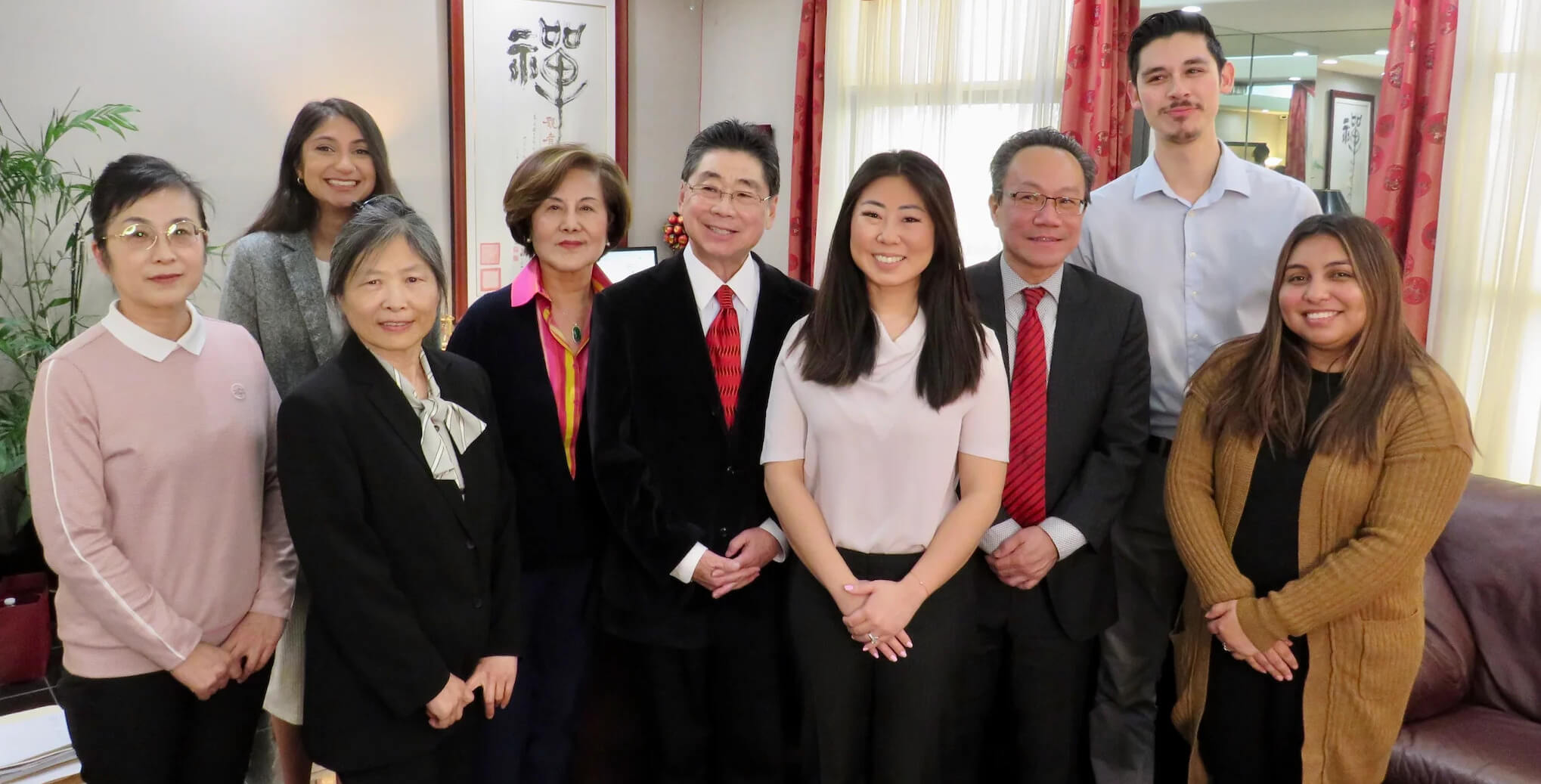

Why Choose Us?

  • Unmatched Expertise

    Trust in Peter Chu's 75+ years of collective experience to guide you through complex immigration matters.

  • Tailored Solutions

    Our personalized strategies adapt to your unique circumstances, ensuring we meet your specific immigration needs.

  • Proven Success

    Benefit from our solid track record in achieving favorable outcomes in various immigration cases across San Diego.

  • Dedicated Service

    Experience our client-first approach that ensures constant support and guidance throughout your immigration journey.

Fountain Valley, home to over 57,000 residents in Orange County, CA, processes hundreds of family-based visa petitions annually through the Santa Ana USCIS field office—making local representation critical for K-3 spouse visa cases where timing and documentation precision determine approval. For Fountain Valley families navigating K-3 lawyer fountain valley needs, the difference between expedited spousal reunification and months of administrative delays often comes down to whether your petition was reviewed by a California-licensed immigration attorney before filing. Law Office of Peter Darwin Chu has served Orange County since 2005, handling K-3 and CR-1/IR-1 spousal visa cases with a focus on the procedural demands specific to Los Angeles-area USCIS adjudication standards.

Book a Consultation

Law Office of Peter Darwin Chu provides k-3 lawyer fountain valley services to Fountain Valley, CA residents—California State Bar licensed immigration representation with same-week consultation availability, serving zip codes 92708 and 92728. We specialize in K-3 spouse visa petitions, I-129F processing, and consular interview preparation for families seeking expedited spousal reunification while I-130 immigrant visa petitions remain pending.

K-3 Lawyer Fountain Valley Services Across Orange County

Law Office of Peter Darwin Chu serves clients throughout Fountain Valley, including neighborhoods near Mile Square Park, the Brookhurst Center district, and residential areas surrounding Bushard Street and Warner Avenue—covering zip codes 92708 and 92728. Our CA-licensed immigration practice extends to surrounding Orange County communities, with all K-3 consultations conducted by attorneys familiar with the Santa Ana USCIS field office's procedural requirements and the Los Angeles consular processing timelines that affect Southern California petitioners.

What Fountain Valley K-3 Visa Clients Can Access

K-3 Spouse Visa Petition Filing

The K-3 nonimmigrant visa allows the foreign spouse of a U.S. citizen to enter the United States while awaiting approval of an immigrant visa petition (Form I-130). For Fountain Valley petitioners, we prepare and file Form I-129F (Petition for Alien Fiancé(e)) specifically for K-3 classification, ensuring that the petition demonstrates the bona fide marital relationship, includes all required civil documents translated and authenticated, and meets the evidentiary standards applied by California Service Center adjudicators. K-3 processing typically takes 6–12 months from filing to consular interview, though timelines vary based on the foreign spouse's country of residence. We include one round of RFE (Request for Evidence) response if USCIS requests additional documentation.

Consular Processing and Interview Preparation

Once USCIS approves the I-129F K-3 petition, the case transfers to the National Visa Center and then to the U.S. consulate in your spouse's home country. We provide country-specific guidance for consular interview preparation, document checklists tailored to the specific embassy's requirements, and coaching on the types of questions consular officers ask to verify marital intent. For Fountain Valley families whose spouses interview at high-scrutiny posts—such as Manila, Ciudad Juárez, or Ho Chi Minh City—this preparation is the difference between approval and a Section 221(g) administrative processing hold that can delay entry by months.

I-130/K-3 Strategy and CR-1 Alternative Analysis

Many Fountain Valley petitioners filing K-3 spouse visas in 2026 discover midway through the process that their underlying I-130 immigrant visa petition has already been approved—rendering the K-3 pathway redundant. We provide strategic counseling on whether to pursue K-3 at all or proceed directly with CR-1/IR-1 immigrant visa processing, which grants immediate permanent residence upon entry rather than requiring adjustment of status after arrival. For couples separated by more than 12 months, the CR-1 route is often faster and more cost-effective. Our Ir-1 Spouse Visa service page explains the immigrant visa alternative in detail.

Get clear, expert legal guidance tailored to your visa, green card, or citizenship needs.

Licensed California Immigration Representation

Law Office of Peter Darwin Chu maintains active membership with the California State Bar and operates in full compliance with California Business and Professions Code Section 6125, which prohibits the unauthorized practice of immigration law by unlicensed consultants or notarios. All K-3 spouse visa petitions are prepared under attorney supervision, signed by a licensed attorney, and filed with attorney representation Form G-28 attached—ensuring that all USCIS correspondence, RFE responses, and consular coordination are handled by counsel authorized to practice before federal immigration agencies. We carry professional liability insurance covering immigration representation and maintain client trust accounts in accordance with California Rules of Professional Conduct. Fountain Valley residents can verify our standing through the State Bar of California's public attorney search portal.

Inquire now to check if you qualify

What if my spouse is already in the U.S. on a tourist visa—can we still file a K-3 lawyer fountain valley case?

If your spouse entered the United States on a B-1/B-2 visitor visa and is still in valid status, filing a K-3 petition is technically possible but strategically inadvisable. The K-3 visa requires the foreign spouse to depart the U.S., attend a consular interview abroad, and re-enter with the K-3 visa—creating unnecessary travel and delay. Instead, Fountain Valley petitioners in this scenario should file Form I-130 and immediately follow with Form I-485 (Adjustment of Status), allowing your spouse to remain in the U.S. while the green card application is processed. Adjustment of status is faster, eliminates consular processing risk, and grants work authorization (via Form I-765) within 3–5 months. The only exception is if your spouse entered the U.S. with immigrant intent or violated their visa terms, in which case consular processing may be unavoidable.

What if USCIS issues an RFE (Request for Evidence) on our Fountain Valley K-3 petition?

USCIS issues RFEs on K-3 petitions when the initial filing lacks sufficient evidence of the marital relationship or when civil documents (marriage certificates, divorce decrees, birth certificates) are incomplete or improperly translated. Fountain Valley petitioners typically have 87 days to respond to an RFE, though extensions are rarely granted. Our response strategy involves assembling additional bona fide marriage evidence—joint bank account statements, lease agreements listing both spouses, photographs from the wedding and post-marriage visits, and affidavits from witnesses who attended the ceremony. We also provide certified translations for any documents submitted in a foreign language, prepared by translators who include the certification statement required by 8 CFR 103.2(b)(3). Failing to respond, or submitting an incomplete response, results in automatic denial of the K-3 petition.

What if my spouse's country has long consular wait times—does k-3 fountain valley processing help?

K-3 visa processing does not bypass consular interview wait times—it simply changes the visa classification under which your spouse interviews. If your spouse is in a country with 6–12 month consular backlogs (such as India, the Philippines, or Mexico), the K-3 petition must still wait in the same interview queue as CR-1/IR-1 immigrant visa applicants. The K-3's advantage is that it allows your spouse to enter the U.S. before the I-130 is fully processed at the consular level, but only if the I-129F K-3 petition is approved and reaches the consulate faster than the underlying I-130. In 2026, due to USCIS processing improvements, many I-130 petitions are adjudicated before the I-129F K-3 petition—making the K-3 route redundant. For Fountain Valley families facing long consular backlogs, we recommend filing the I-130 with premium processing (if available) or pursuing Direct Consular Filing (DCF) if you meet the eligibility criteria.

What if we got married abroad and the marriage certificate is not in English—can Fountain Valley K-3 filing proceed?

Yes, but the foreign marriage certificate must be translated into English by a certified translator and accompanied by a translation certification statement before USCIS will accept it. Fountain Valley petitioners frequently submit marriage certificates from Mexico, the Philippines, Vietnam, and India—all of which require full-page translations that include every stamp, seal, and annotation on the original document. The translator's certification must state that the translation is complete and accurate and that the translator is competent in both the source and target languages. USCIS rejects translations that omit the certification or that are prepared by family members. If the foreign country does not issue official marriage certificates (as in some Middle Eastern or African nations), we work with you to obtain alternative proof of marriage recognized under that country's law, such as a religious marriage contract or a court-issued family registry extract.

K-3 Spouse Visa vs. CR-1 Immigrant Visa: Which Path Fits Fountain Valley Families?

Fountain Valley petitioners seeking spousal reunification face a choice between the K-3 nonimmigrant visa (which allows entry while the I-130 is pending) and the CR-1/IR-1 immigrant visa (which grants immediate permanent residence upon entry). Many online sources present the K-3 as the 'faster' option, but that characterization is outdated. Here's the honest answer: in 2026, the K-3 visa is rarely faster than direct CR-1 processing, and it imposes additional costs and procedural steps—adjustment of status filing after entry, work authorization delays, and the need to maintain lawful status while the I-485 is pending. The K-3 made sense in the 2000s when I-130 processing took 18–24 months; today, with I-130 processing averaging 10–14 months, most I-130 petitions are approved before the K-3 petition reaches the consular interview stage. We recommend K-3 only in narrow scenarios: when the U.S. petitioner has urgent family circumstances requiring the spouse's immediate presence, or when the foreign spouse is in a country with security clearance delays that make CR-1 processing unpredictable.

FactorK-3 Spouse VisaCR-1 Immigrant VisaDIY FilingProfessional Assessment
Entry statusNonimmigrant (requires adjustment)Immediate permanent residentVariableCR-1 avoids the adjustment step entirely—single-stage process
Work authorizationRequires separate I-765 filing after entry (3–5 months)Immediate upon entryNot applicableCR-1 allows work from day one; K-3 creates a 3–5 month employment gap
Total cost$535 I-129F + $1,225 I-485 + $410 I-765 = $2,170+$535 I-130 + $325 consular fee = $860Filing fees onlyCR-1 costs 60% less in government fees alone
Processing time (2026)12–18 months (I-129F + consular + I-485)10–16 months (I-130 + consular)UnpredictableCR-1 is now faster in most cases due to improved I-130 processing times

Get in touch

Frequently Asked Questions

Find answers to common questions about our services

  • K-3 visa processing from initial I-129F filing to consular interview currently averages 12–18 months for Fountain Valley residents, though timelines vary by the foreign spouse's country of residence and the workload at the assigned U.S. consulate. USCIS p

  • Yes—filing Form I-130 (immigrant visa petition) is actually a prerequisite for K-3 eligibility. The K-3 visa exists solely to allow your spouse to join you in the U.S. while the I-130 is pending, so you must file the I-130 first and then file Form I-129F

  • A complete K-3 petition requires Form I-129F with the K-3 classification box checked, proof of U.S. citizenship (passport or birth certificate), certified copy of the foreign marriage certificate with certified English translation, proof that the underlyi

  • Consular denial of a K-3 visa is rare—most denials occur at the USCIS stage during I-129F adjudication. If the consular officer denies the K-3 visa, the denial letter will cite the specific Immigration and Nationality Act section under which the visa was

  • Yes—K-3 visa holders enter the U.S. in nonimmigrant status and must file Form I-485 (Application to Adjust Status to Permanent Resident) to obtain a green card. This filing must occur after entry and is based on the underlying I-130 petition that made the

  • No—K-3 visa holders must apply for work authorization by filing Form I-765 (Application for Employment Authorization) after entering the United States. The I-765 must be filed together with or after the I-485 adjustment of status application. USCIS curren

  • The K-1 visa is for fiancé(e)s of U.S. citizens who are not yet married—it allows the foreign fiancé(e) to enter the U.S. for the purpose of getting married within 90 days of entry. The K-3 visa is for spouses of U.S. citizens who are already legally marr

  • Fountain Valley residents are served by the Santa Ana USCIS field office located at 600 W. Santa Ana Blvd., Santa Ana, CA 92701, approximately 6 miles from central Fountain Valley. This office handles biometrics appointments for I-485 adjustment of status

Need Personalized Immigration Guidance?

Law Office of Peter Darwin Chu provides k-3 lawyer fountain valley representation to Fountain Valley, CA residents with same-week consultation scheduling, California State Bar licensed immigration attorneys, and I-129F petition preparation including RFE response and consular interview coaching.

Related Immigration Services for Fountain Valley Residents

Beyond K-3 spouse visa representation, Law Office of Peter Darwin Chu assists Fountain Valley families with a full range of family-based immigration services—including Ir-1 Spouse Visa immigrant petitions for couples married more than two years, Citizenship naturalization applications for green card holders seeking U.S. citizenship, and I-751 Lawyer San Diego removal of conditions petitions for conditional residents approaching their two-year anniversary. We also handle employment-based nonimmigrant visas for Fountain Valley professionals, including O-1 Visa Lawyer San Diego for individuals with extraordinary ability, Expert H-1 Visa Lawyer San Diego for specialty occupation workers, and E-1 Visa Lawyer San Diego for treaty traders. For comprehensive information on both immigrant and nonimmigrant pathways, visit our Immigrant Visas and Non-immigrant Visas overview pages.

Speak With Us Today