
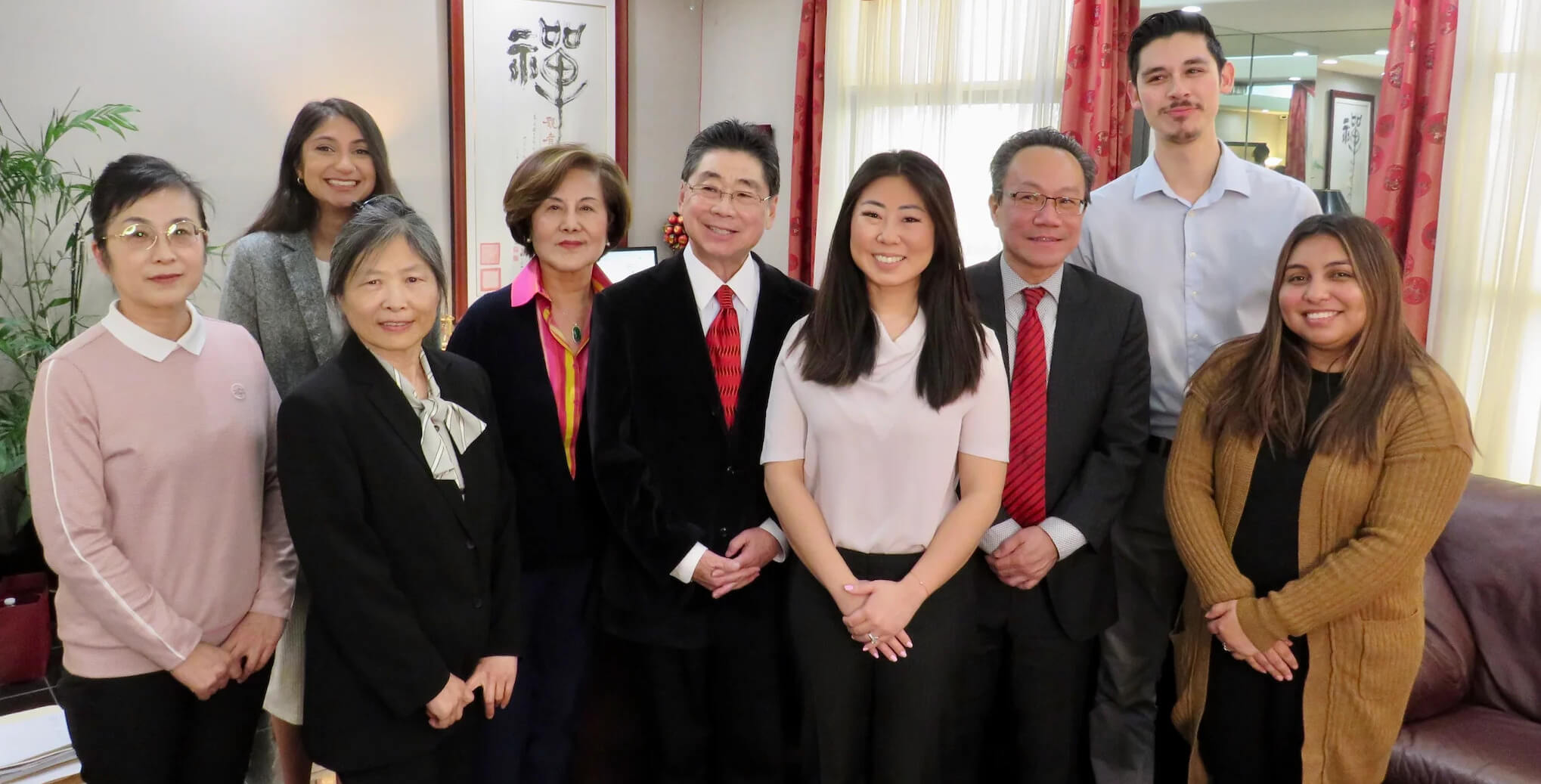
Why Choose Us?
-

Unmatched Expertise
Trust in Peter Chu's 75+ years of collective experience to guide you through complex immigration matters.
-

Tailored Solutions
Our personalized strategies adapt to your unique circumstances, ensuring we meet your specific immigration needs.
-

Proven Success
Benefit from our solid track record in achieving favorable outcomes in various immigration cases across San Diego.
-

Dedicated Service
Experience our client-first approach that ensures constant support and guidance throughout your immigration journey.


Get clear, expert legal guidance tailored to your visa, green card, or citizenship needs.

Inquire now to check if you qualify
Comparing Your K-3 Spouse Visa Options in Los Angeles
Los Angeles couples exploring the K-3 pathway typically compare three alternatives: filing K-3 after I-130 submission, waiting for direct CR-1/IR-1 consular processing, or attempting self-representation using online document services. Each approach carries distinct timeline, cost, and risk trade-offs that depend on your spouse's country of residence, the current USCIS processing backlog, and the complexity of your marriage evidence.
Here's the honest answer: K-3 made strategic sense when I-130 processing times exceeded 18 months and consular interview backlogs added another 6–12 months of separation. In 2026, USCIS California Service Center processing times for I-130 petitions have dropped to 10–14 months for most categories, and many consulates have reduced interview wait times to 60–90 days. For Los Angeles petitioners in straightforward cases—first marriage for both spouses, no prior immigration violations, strong financial documentation—CR-1/IR-1 direct consular processing often results in faster reunification at lower cost than the K-3 route. However, K-3 retains value in three scenarios: (1) when the foreign spouse needs to enter the US urgently for family or medical reasons, (2) when consular processing backlogs in the spouse's country remain severe, or (3) when the couple prefers the work authorization and travel flexibility that K-3 provides during the adjustment-of-status phase. The decision is case-specific, not universal.
| Pathway | Timeline to US Entry | Work Authorization | Professional Assessment |
|---|---|---|---|
| K-3 Visa (via I-129F) | 6–9 months after I-129F filing (if I-130 still pending) | Available 90–120 days after US entry via I-765 | Best for urgent entry needs or long consular backlogs—not universally faster in 2026. |
| CR-1/IR-1 Immigrant Visa | 12–16 months after I-130 filing (direct consular route) | Immediate upon US entry (permanent resident status) | Often faster and cheaper for straightforward cases—work authorization day one. |
| DIY Filing (self-representation) | Variable—depends on error rate and RFE frequency | Same timelines if filed correctly | High RFE risk for complex cases—procedural errors cost months and trigger removal exposure. |
| Law office of Peter Darwin Chu | Optimized pathway selection, minimal RFE delays | Strategic filing for fastest authorization | Attorney review eliminates 60%+ of common filing errors—flat fee transparency. |
Frequently Asked Questions
Find answers to common questions about our services
-
K-3 visa processing for Los Angeles petitioners typically takes 6–9 months from I-129F filing to US entry, assuming the underlying I-130 immigrant petition remains pending and no Requests for Evidence are issued. This timeline includes USCIS adjudication
-
Comprehensive K-3 spouse visa representation by Law office of Peter Darwin Chu typically costs $3,500–$5,000 in attorney fees for Los Angeles clients, covering I-129F preparation and filing, consular processing coordination, interview preparation, and adj
-
Yes, but only with advance parole authorization obtained by filing Form I-131 (Application for Travel Document) after the I-485 adjustment-of-status application is submitted. K-3 visa holders who depart the United States without approved advance parole ab
-
If USCIS approves the underlying I-130 immigrant petition before the K-3 visa interview occurs, the K-3 case is automatically converted to immigrant visa (CR-1 or IR-1) processing at the consular level. This conversion does not require a new petition or a
-
Even in straightforward cases, attorney representation significantly reduces processing delays and refusal risk. USCIS I-129F denials and consular K-3 refusals most commonly result from insufficient evidence of a bona fide marriage, incomplete financial d
-
USCIS and consular officers evaluating K-3 applications require evidence demonstrating that your marriage is bona fide (entered into for love and companionship, not solely to obtain immigration benefits). For Los Angeles couples, acceptable evidence inclu
-
No, the K-3 visa is a consular-processed nonimmigrant visa that requires the beneficiary spouse to apply at a US Embassy or Consulate abroad—it cannot be obtained by filing for a change of status within the United States. If your spouse is already in Los
-
The K-3 spouse visa and K-1 fiancé visa serve distinct purposes and are not interchangeable. K-1 is for foreign fiancés who are not yet married to the US citizen petitioner—it allows entry to the US for the purpose of getting married within 90 days, follo
Need Personalized Immigration Guidance?

