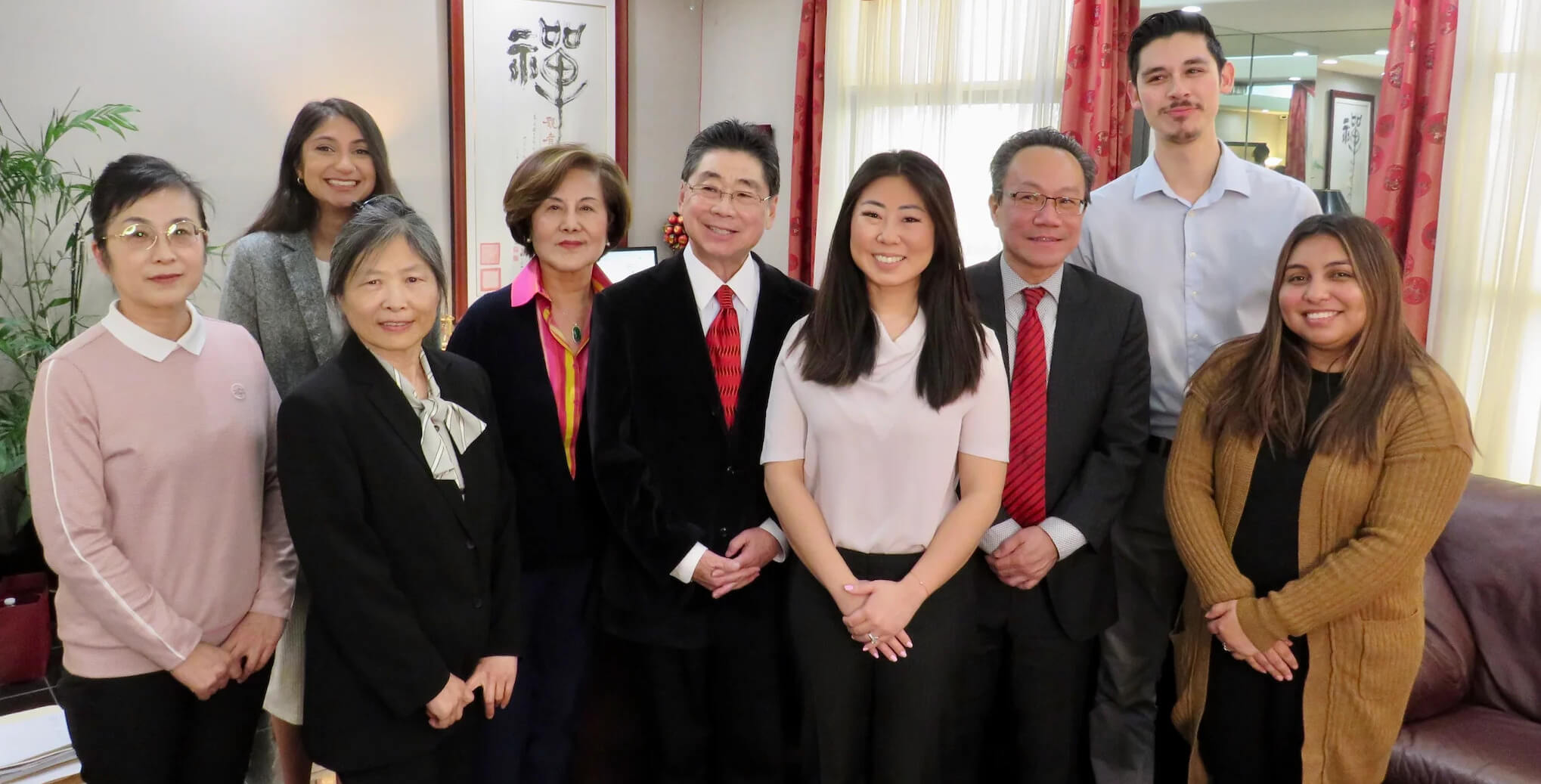

Why Choose Us?

  • Unmatched Expertise

    Trust in Peter Chu's 75+ years of collective experience to guide you through complex immigration matters.

  • Tailored Solutions

    Our personalized strategies adapt to your unique circumstances, ensuring we meet your specific immigration needs.

  • Proven Success

    Benefit from our solid track record in achieving favorable outcomes in various immigration cases across San Diego.

  • Dedicated Service

    Experience our client-first approach that ensures constant support and guidance throughout your immigration journey.

Miami-Dade County processed over 47,000 immigration petitions in 2025, making it the second-highest volume immigration jurisdiction in the United States after Los Angeles County. And one where K-3 spouse visa timelines, consular processing procedures, and adjustment-of-status strategy require attorneys who understand both USCIS Miami field office practices and the specific demands of National Visa Center coordination. For Miami residents navigating k-3 lawyer miami representation, the difference between a timely visa approval and a months-long Request for Evidence delay often comes down to whether your initial I-129F petition and supporting evidence were reviewed by an experienced immigration lawyer miami before USCIS submission. Law office of Peter Darwin Chu has handled K-3 spouse visa cases for Miami, FL clients since 2009, with direct knowledge of consular processing timelines at U.S. embassies in Latin America, the Caribbean, and Europe. The regions from which most Miami K-3 applicants originate.

Book a Consultation

Law office of Peter Darwin Chu provides k-3 lawyer miami representation to Florida residents filing K-3 spouse visa petitions. Licensed under the Florida Bar, serving Miami-Dade County and surrounding areas, with same-week consultations available by phone, video, or in-person at our Miami office. We specialize in k-3 spouse visa miami cases where the foreign spouse is abroad and the U.S. petitioner needs expedited reunion before the immigrant visa (CR-1/IR-1) becomes available. Our representation covers I-129F petition preparation, National Visa Center document submission, consular interview preparation, and adjustment of status once the K-3 spouse enters the United States.

K-3 Lawyer Miami Available Across Miami and Surrounding Areas

Law office of Peter Darwin Chu represents K-3 spouse visa clients throughout Miami, including Downtown Miami, Brickell, Coral Gables, Coconut Grove, and Little Havana. Zip codes 33101, 33102, 33107, 33109, and 33110. As well as clients across Miami-Dade, Broward, and Palm Beach counties. All K-3 petitions are filed electronically with USCIS, and consular processing coordination is managed regardless of which U.S. embassy or consulate the foreign spouse will attend. Florida residents with qualifying marriages to foreign nationals are eligible for representation, and we handle cases where the foreign spouse resides anywhere in the world.

What Miami K-3 Spouse Visa Clients Can Access

I-129F Petition for Alien Fiancé(e) (K-3 Track)

The K-3 visa is technically a derivative of the I-130 immigrant visa petition. Allowing the foreign spouse to enter the U.S. while the I-130 is pending. We prepare the I-129F petition, draft the required affidavit of support evidence preview, and compile the bona fides-of-marriage documentation (joint financial accounts, lease agreements, photos, travel records) that USCIS Miami reviewers expect to see before approving the case. Miami-area petitioners benefit from our understanding of USCIS processing times at the Texas Service Center (where I-129F petitions are adjudicated) and the specific documentary standards applied to marriage-based cases originating from high-fraud countries. A consultation with a k-3 lawyer miami ensures your initial filing avoids the most common RFE triggers. Missing translations, inconsistent timelines, and insufficient evidence of ongoing marital relationship.

Consular Processing and NVC Coordination

Once USCIS approves the I-129F, the case transfers to the National Visa Center and then to the U.S. embassy or consulate where the foreign spouse will interview. We coordinate document submission (civil documents, police certificates, medical exam results), monitor case status through the CEAC portal, and prepare the foreign spouse for the consular interview with country-specific guidance. For Miami clients whose spouses are interviewing in Latin America or the Caribbean. Particularly Colombia, Brazil, Venezuela, Jamaica, and the Dominican Republic. We provide embassy-specific interview preparation that addresses the administrative processing delays and security clearance timelines common to those posts. This is where an immigration lawyer miami with consular experience becomes essential: many K-3 denials result not from petition defects but from interview answers that failed to satisfy consular officers' concerns about the bona fides of the marriage.

Adjustment of Status After K-3 Entry

The K-3 visa allows the foreign spouse to enter the U.S. and remain while the underlying I-130 immigrant visa petition is adjudicated. Most K-3 entrants eventually adjust status to lawful permanent resident (green card holder) through Form I-485 rather than completing consular processing abroad. We represent K-3 spouses through the adjustment process. Including the required medical examination, employment authorization and advance parole applications (Form I-765/I-131), and preparation for the adjustment interview at the USCIS Miami field office. Adjustment interviews in Miami are typically scheduled 12–18 months after I-485 filing, and interview preparation that addresses the officer's authority to question the validity of the marriage. Not just admissibility. Is what separates successful adjustment cases from those that end in Notice of Intent to Deny.

K-4 Derivative Visas for Children

Unmarried children under 21 of the K-3 spouse are eligible for K-4 derivative visas, allowing them to accompany or follow-to-join the K-3 parent. We include K-4 derivative beneficiaries in the I-129F petition when applicable and coordinate their consular processing and adjustment of status once in the U.S. For Miami families where the K-3 spouse has children from a prior relationship, understanding the age-out rules (Child Status Protection Act) and the documentation required to prove the parent-child relationship. Birth certificates, custody decrees, and affidavits. Is critical to avoiding derivative visa denials that strand children abroad while the parent enters the United States.

Get clear, expert legal guidance tailored to your visa, green card, or citizenship needs.

Licensed Florida Immigration Attorney — Miami Bar Member Since 2009

Law office of Peter Darwin Chu operates under active membership in the Florida Bar and is authorized to practice immigration law before U.S. Citizenship and Immigration Services, the Executive Office for Immigration Review (immigration court), and the Board of Immigration Appeals. We maintain professional liability insurance, comply with Florida Rules of Professional Conduct governing attorney-client confidentiality and conflict-of-interest disclosure, and operate under the supervision requirements established by the American Immigration Lawyers Association's ethical standards. K-3 spouse visa cases handled by our firm include representation agreements that specify the scope of services, fee structure, and the client's right to termination. All required disclosures under Florida Bar regulations for immigration representation. Miami clients benefit from working with a Florida-licensed attorney rather than a notario or unlicensed consultant: only licensed attorneys can provide legal advice, represent clients before USCIS, and appear at adjustment interviews or immigration court proceedings if the case becomes contested.

Inquire now to check if you qualify

What if my spouse and I married abroad and I want to bring them to Miami faster than the CR-1 immigrant visa timeline allows?

The K-3 visa was designed specifically for this scenario. Allowing a U.S. citizen to file Form I-129F after filing the I-130 immigrant petition, giving the foreign spouse the option to enter the U.S. on a nonimmigrant visa while the immigrant visa processes. In practice, K-3 filings make sense when USCIS processing times for the I-130 exceed 12–15 months and the petitioner cannot wait for consular processing to complete abroad. However, many immigration lawyers in Miami now advise against the K-3 in favor of direct consular processing (CR-1/IR-1) because USCIS processing improvements since 2023 have reduced I-130 approval times to 10–14 months in many cases, eliminating the K-3's original speed advantage. A consultation with a k-3 lawyer miami allows us to compare current processing times for both pathways and recommend the strategy that reunites you with your spouse soonest while avoiding duplicate filing fees and procedural complexity. If your spouse is in a country with long visa wait times (e.g., Mexico, Philippines, India), the K-3 may still be faster; if they are in a low-backlog country, direct CR-1 processing may be simpler.

What if I filed an I-130 for my spouse six months ago — can I still add a K-3 petition to speed up their arrival in Miami?

Yes. The I-129F for K-3 classification can be filed any time after the I-130 is pending, as long as the I-130 has not yet been approved. USCIS requires that the I-130 receipt notice be included with the I-129F filing as proof that the immigrant petition is pending. However, whether adding the K-3 will actually accelerate your spouse's arrival depends on current processing times: if your I-130 is already at the National Visa Center stage or nearing consular interview scheduling, filing the K-3 will not provide a faster pathway because the K-3 itself requires NVC processing and consular interview before visa issuance. For Miami residents, the strategic value of a K-3 filing is highest when the I-130 is still at the USCIS adjudication stage and consular processing has not yet begun. A k-3 spouse visa miami attorney can review your I-130 receipt date, compare it to current USCIS processing times, and calculate whether the K-3 will shorten or lengthen your overall timeline.

What if my K-3 spouse enters Miami and we decide to complete adjustment of status instead of returning abroad for consular processing?

This is the most common outcome for K-3 cases. And precisely why the K-3 visa exists. Once your spouse enters the U.S. on a K-3 visa, they are authorized to remain while the I-130 immigrant petition is adjudicated, and they can file Form I-485 (adjustment of status) to become a lawful permanent resident without leaving the country. The advantage of adjusting status in Miami rather than completing consular processing abroad is that your spouse remains in the U.S. throughout the process, can apply for work authorization (typically approved within 3–5 months), and avoids the risk of extended administrative processing or visa delays that can occur at certain overseas consular posts. The disadvantage is that adjustment interviews at the USCIS Miami field office are currently scheduled 12–18 months after I-485 filing. Longer than many consular processing timelines. An immigration lawyer miami can model both scenarios based on your spouse's country of origin and advise whether adjustment or consular processing is faster, but most K-3 families prefer to adjust because it keeps the family together throughout the green card process.

What if my K-3 visa petition is denied — do I lose the underlying I-130 immigrant petition as well?

No. The I-129F (K-3 petition) and the I-130 (immigrant petition) are independent filings, and denial of the K-3 does not affect the validity or processing of the I-130. If USCIS denies your I-129F, the I-130 continues to process on its original timeline, and your spouse will eventually receive an immigrant visa through consular processing once the I-130 is approved and a visa number becomes available. The most common reasons for K-3 denial are: the I-130 was already approved before the I-129F was adjudicated (rendering the K-3 moot), insufficient evidence of a bona fide marriage, or failure to demonstrate that the U.S. petitioner is domiciled in the United States. In Miami cases, we review the I-129F denial notice, determine whether the issue is correctible, and advise whether to appeal the K-3 denial or simply proceed with the I-130 consular processing track. For most clients, the I-130 path remains the guaranteed outcome, and the K-3 was always an optional acceleration mechanism.

K-3 Attorney vs. DIY Filing vs. Online Form Service — Miami Petitioner Comparison

Miami residents filing K-3 spouse visa petitions face three options: hiring a licensed k-3 lawyer miami, filing the I-129F and I-130 petitions independently using USCIS instructions, or using an online immigration form service that provides document preparation but no legal advice. Each path carries trade-offs in cost, risk, and timeline.

Here's the honest answer: The K-3 petition is procedurally simpler than most employment-based visa petitions, and USCIS approval rates for K-3 cases filed by pro se petitioners (those without attorneys) are relatively high when the marriage is genuine and the documentation is complete. The primary risk of DIY filing is not outright denial but rather Requests for Evidence (RFEs) that delay approval by 3–6 months. Typically triggered by missing translations, insufficient bona fides evidence, or failure to address prior immigration violations that affect admissibility. An RFE that could have been avoided with pre-filing attorney review transforms a 6-month K-3 approval timeline into a 12-month process. Online form services provide value for straightforward cases where the couple has no complicating factors (no prior visa denials, no criminal history, clear documentary evidence of the marriage), but they do not provide legal advice, cannot respond to RFEs, and will not represent you at a consular interview or adjustment interview if questions arise. For Miami couples where the foreign spouse has prior visa denials, overstay history, or is from a country with high administrative processing rates (Venezuela, Cuba, Russia, China), the cost of an attorney is typically smaller than the cost of a delayed or denied case.

FactorK-3 Lawyer MiamiDIY FilingOnline Form Service
Upfront Cost$2,500–$4,500 (petition + consular prep)$0 (USCIS fees only: $535 I-129F + $535 I-130)$300–$800 form preparation fee
RFE ResponseIncluded in representationPetitioner researches and drafts response independentlyNot included. Client handles RFE alone
Consular Interview PrepAttorney reviews case file, prepares foreign spouse with embassy-specific guidanceNo preparation unless petitioner researches independentlyNot included
Adjustment RepresentationIncluded or available as add-on servicePetitioner attends interview aloneNot available
Timeline RiskLowest. Attorney pre-screens for RFE triggers before filingModerate. RFE rate ~25% for pro se filersModerate. Form accuracy is high, but legal strategy is absent
Professional AssessmentBest for cases with any complicating factors. Prior denials, criminal history, long separation, or high-scrutiny nationality. Worth the cost to avoid RFE delays and consular denials that strand the foreign spouse abroad for months.Viable for straightforward cases where the couple married recently, has strong documentary evidence, and neither party has immigration violations. If an RFE is issued, most petitioners ultimately hire an attorney to respond. Negating the initial savings.Useful for form accuracy but provides no legal protection if the case becomes contested. Not suitable for cases requiring legal judgment. Only data entry.

Get in touch

Frequently Asked Questions

Find answers to common questions about our services

  • Current USCIS processing times for Form I-129F (K-3 petition) average 6–9 months from filing to approval, after which the case transfers to the National Visa Center for document processing (2–4 months) and then to the U.S. embassy or consulate for intervi

  • Yes. K-3 visa holders are eligible to apply for employment authorization (Form I-765) immediately upon entering the United States. USCIS typically approves I-765 applications for K-3 spouses within 3–5 months, at which point the spouse receives an Employm

  • If USCIS approves the I-130 before the K-3 visa is issued, the K-3 petition becomes moot. The foreign spouse will proceed directly to immigrant visa (CR-1 or IR-1) consular processing rather than K-3 issuance. This is increasingly common because USCIS has

  • The length and genuineness of the marriage affect the strength of your case but do not eliminate the procedural and evidentiary requirements for K-3 approval. Even well-documented, long-term marriages can result in RFEs or consular interview delays if the

  • The K-3 is a nonimmigrant visa that allows the foreign spouse to enter the U.S. while the I-130 immigrant petition is pending. The spouse must then file for adjustment of status (I-485) to become a permanent resident. The CR-1 (or IR-1 for marriages over

  • Technically yes. There is no legal prohibition against filing Form I-129F while the foreign spouse is physically present in the United States on a B-1/B-2 visitor visa or visa waiver. However, the K-3 visa requires consular processing abroad, so the forei

  • The I-129F petition for K-3 classification requires: proof of U.S. citizenship (passport or birth certificate), proof of the legal marriage (marriage certificate with certified English translation), proof that any prior marriages were legally terminated (

  • The K-3 petition itself (Form I-129F) does not have an income requirement, but the foreign spouse cannot receive the K-3 visa at the consular interview without an approved Form I-864 Affidavit of Support demonstrating that the U.S. petitioner's income is

Need Personalized Immigration Guidance?

Law office of Peter Darwin Chu provides k-3 lawyer miami representation for Florida residents filing spouse visa petitions. Licensed by the Florida Bar, serving Miami-Dade County with same-week consultations, I-129F preparation, consular processing coordination, and adjustment of status representation through green card approval.

Related Immigration Services for Miami Residents

Miami families navigating K-3 spouse visa cases often require related immigration services as their case progresses. Our firm provides IR-1 Spouse Visa representation for couples who choose direct consular processing instead of the K-3 pathway, Citizenship services for foreign spouses who become eligible for naturalization after three years of permanent residence, and I-751 Lawyer San Diego representation (applicable to Miami clients as well) for couples removing conditions on the two-year conditional green card issued after K-3 adjustment. We also represent clients seeking O-1 Visa Lawyer San Diego, Expert H-1 Visa Lawyer San Diego, and E-1 Visa Lawyer San Diego services for employment-based cases. Miami-area clients benefit from our full-spectrum immigration practice. Allowing seamless transitions from family-based to employment-based cases as clients' circumstances evolve. For an assessment of which visa pathway best fits your timeline and goals, contact us to schedule a consultation.

Speak With Us Today