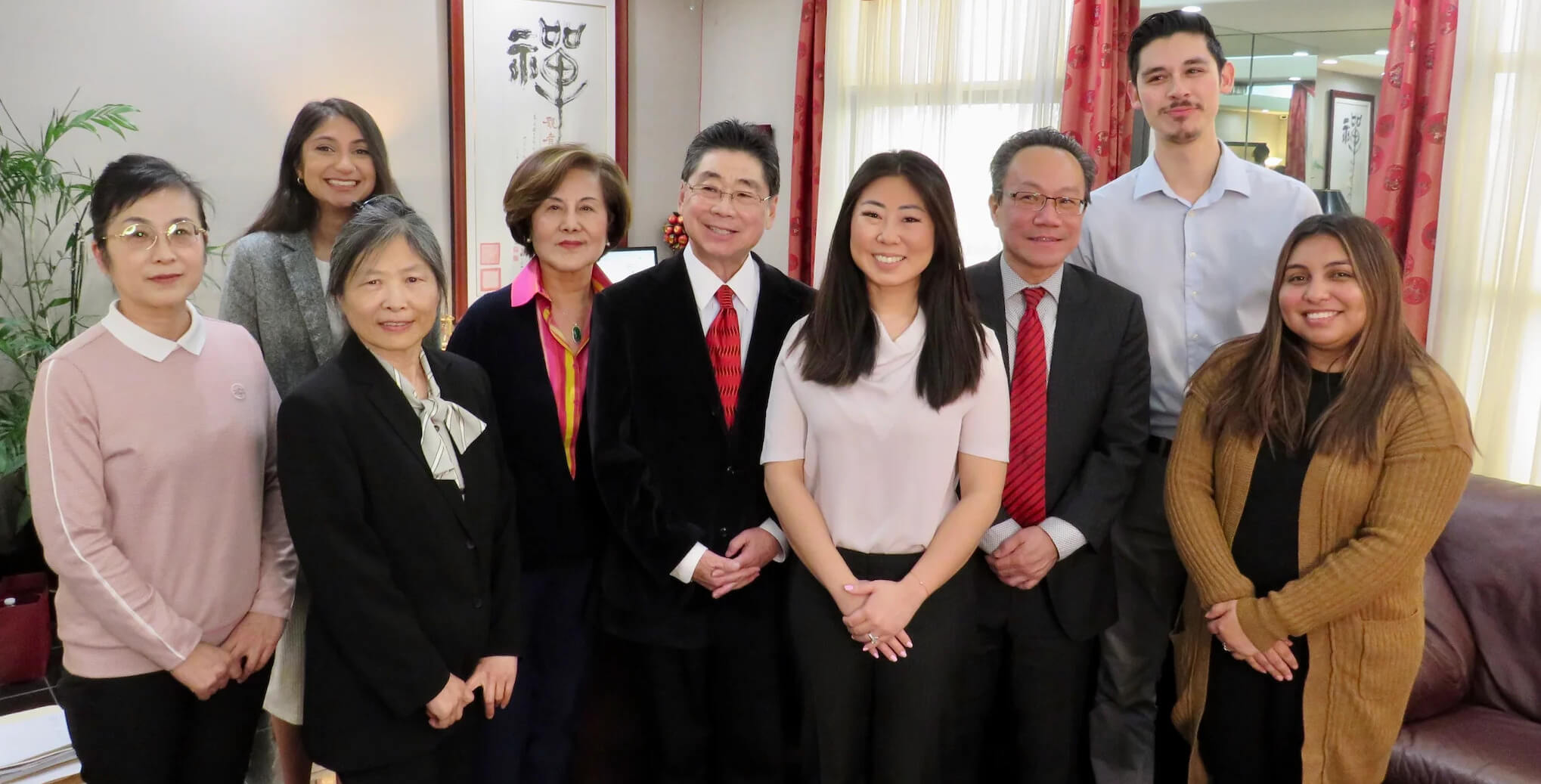

Why Choose Us?

  • Unmatched Expertise

    Trust in Peter Chu's 75+ years of collective experience to guide you through complex immigration matters.

  • Tailored Solutions

    Our personalized strategies adapt to your unique circumstances, ensuring we meet your specific immigration needs.

  • Proven Success

    Benefit from our solid track record in achieving favorable outcomes in various immigration cases across San Diego.

  • Dedicated Service

    Experience our client-first approach that ensures constant support and guidance throughout your immigration journey.

Palm Springs, CA processed over 1,200 family-based immigration petitions through the San Bernardino County field office in 2025, serving one of the fastest-growing international marriage markets in the Inland Empire. For Palm Springs residents navigating K-3 spouse visa applications, the difference between a 6-month wait and an 18-month separation often comes down to whether Form I-129F was filed with complete derivative beneficiary documentation and proper consular processing elections before USCIS issued the I-797 receipt. Law office of Peter Darwin Chu has handled K-3 lawyer Palm Springs cases since 2008, representing clients across Coachella Valley with specialized knowledge of Los Angeles consular interview scheduling and California petitioner domicile requirements.

Book a Consultation

Law office of Peter Darwin Chu provides K-3 lawyer Palm Springs services to California residents. Licensed under the California State Bar, serving Palm Springs and surrounding Riverside County communities with same-week consultations, complete I-129F preparation, and consular processing coordination. We specialize in expediting spouse reunification for couples separated by immigration processing delays, handling cases in zip codes 92258 through 92292.

K-3 Lawyer Palm Springs Available Across Palm Springs and Surrounding Areas

Law office of Peter Darwin Chu serves K-3 spouse visa clients throughout Palm Springs, CA, including Desert Park, Smoke Tree, and Tahquitz River Estates neighborhoods. Covering zip codes 92258, 92262, 92263, 92264, and 92292. Our immigration lawyer Palm Springs practice represents petitioners and beneficiaries across Riverside County, with particular expertise in cases requiring coordination between USCIS California Service Center filings and consular processing at U.S. Embassy Ciudad Juárez, Guadalajara, and other high-volume posts.

What Palm Springs Residents Can Access

K-3 Spouse Visa Palm Springs Petition Preparation

Complete preparation of Form I-129F (Petition for Alien Fiancé(e)) filed concurrently with or after Form I-130 (Petition for Alien Relative) to expedite spouse entry while the immigrant visa petition remains pending. California petitioners must demonstrate U.S. domicile, valid marriage to the foreign national spouse, and no previous K-3 denials. We handle derivative K-4 petitions for minor children, NVC case number transfers, and consular appointment scheduling. Most Palm Springs K-3 cases involve spouses abroad in Mexico, Philippines, or Vietnam waiting 12–24 months for I-130 approval. The K-3 classification allows entry in as little as 6–9 months.

Immigration Lawyer Palm Springs Consular Processing Coordination

We coordinate directly with National Visa Center (NVC) and U.S. consular posts to ensure your K-3 spouse visa Palm Springs case progresses without administrative delays. This includes DS-160 online nonimmigrant visa application completion, Affidavit of Support (Form I-134) preparation, medical examination scheduling, and interview preparation tailored to the specific consular post. For Palm Springs residents with spouses abroad, consular interview wait times vary dramatically by location. Our firm tracks current processing timelines and advises on optimal filing strategies.

Ir-1 Spouse Visa Alternative Analysis

Many Palm Springs couples filing K-3 petitions do not realize that the IR-1 (immigrant spouse visa) may now process faster than K-3 at certain consular posts due to USCIS policy changes effective 2024. We provide side-by-side timeline comparisons for your specific situation, evaluate whether K-3 withdrawal and IR-1 continuation is strategically sound, and handle the transition if your I-130 approves before K-3 visa issuance. Both pathways lead to lawful permanent residence, but the entry classification and adjustment process differ significantly.

Get clear, expert legal guidance tailored to your visa, green card, or citizenship needs.

Licensed California Immigration Practice Serving Palm Springs

Law office of Peter Darwin Chu maintains all required California State Bar licenses and operates in full compliance with California Business and Professions Code Section 6125 governing the practice of law. We adhere to American Immigration Lawyers Association (AILA) professional standards, maintain client trust account protocols under California Rules of Professional Conduct Rule 1.15, and provide written fee agreements as required by California immigration representation regulations. Every K-3 lawyer Palm Springs case is handled by a licensed attorney. Never a notario or unlicensed consultant. Our firm carries professional liability insurance and participates in continuing legal education specific to family-based immigration law.

Inquire now to check if you qualify

What if my I-130 petition for my spouse was filed 8 months ago and is still pending — can I file a K-3 petition now in Palm Springs?

Yes. The K-3 classification was created specifically for this scenario. You can file Form I-129F (K-3 petition) at any point after your I-130 spouse petition has been pending, even if it was filed months or years ago. USCIS will process the K-3 petition on an expedited track, and if approved before the I-130, your spouse can enter the U.S. on a K-3 visa and apply for adjustment of status here in California rather than waiting abroad for consular processing. However, if your I-130 approves before the K-3 visa is issued, the consular post will automatically convert the case to an IR-1 immigrant visa interview. The faster pathway wins. For Palm Springs residents, we evaluate current I-130 processing times at California Service Center and compare them to K-3 timelines at your spouse's consular post to determine if filing the K-3 makes strategic sense.

What if I am a U.S. citizen living in Palm Springs but my spouse is in Mexico — which consular post will process the K-3 visa?

Your spouse will be interviewed at the U.S. consular post that has jurisdiction over their place of residence in Mexico. Typically U.S. Embassy Mexico City, or consulates in Ciudad Juárez, Guadalajara, Monterrey, or Tijuana. After USCIS approves your K-3 petition, the case transfers to the National Visa Center (NVC), which then forwards it to the appropriate consular post based on your spouse's address. Processing times and interview wait times vary significantly by location. Ciudad Juárez and Tijuana currently have the shortest wait times for family-based cases. As a Palm Springs petitioner, you do not choose the consular post. It is determined by your spouse's foreign residence. However, in limited circumstances involving safety concerns or extreme delays, you can request a transfer to a different consular post.

What if my spouse enters the U.S. on a K-3 visa — how do they get a green card in Palm Springs?

Once your spouse enters the U.S. on a K-3 visa, they must file Form I-485 (Application to Register Permanent Residence or Adjust Status) to obtain lawful permanent resident status (a green card). This adjustment application is filed with USCIS, not with an immigration court, and does not require leaving the country. The I-485 is based on the underlying I-130 petition you filed. The same one that qualified your spouse for K-3 classification. For Palm Springs residents, adjustment cases are processed by the USCIS Los Angeles field office, with interviews typically scheduled 8–14 months after filing. During the adjustment process, your spouse can apply for work authorization (Form I-765) and advance parole travel permission (Form I-131), both of which are usually approved within 4–6 months.

What if I filed a K-3 petition for my spouse but we also have two minor children abroad — do they qualify for visas in Palm Springs?

Yes. Your spouse's unmarried children under age 21 qualify for K-4 derivative visas based on your K-3 petition. You must list each child on Form I-129F when you file the K-3 petition, and they will be included in the same USCIS approval and consular processing. The children do not need separate petitions, and they can enter the U.S. with your spouse or follow-to-join after your spouse's entry. Once in the U.S., each K-4 child files their own Form I-485 adjustment application to obtain permanent residence. The critical deadline is that children must remain under age 21 and unmarried at the time of K-4 visa issuance. If a child turns 21 or marries before the visa is issued, they lose K-4 eligibility and require a separate family preference petition.

K-3 Spouse Visa vs. CR-1/IR-1 Immigrant Visa — Which Pathway Fits Your Palm Springs Case?

Most Palm Springs couples assume the K-3 visa is always faster than waiting for the immigrant visa (CR-1 or IR-1) to be approved, but USCIS processing changes in 2024–2025 have reversed this assumption at many consular posts. Here's the honest answer: the K-3 classification now serves a narrower purpose than it did when Congress created it in 2000, and many attorneys recommend filing the I-130 alone unless separation hardship justifies the additional filing fees and paperwork burden of a concurrent K-3 petition.

The K-3 allows your spouse to wait in the U.S. while the I-130 processes, but once here, they still must file for adjustment of status. Adding 8–14 months of USCIS processing and an interview at the Los Angeles field office. The IR-1 visa, by contrast, grants immediate permanent residence upon entry with no further USCIS applications required. For couples where the foreign spouse is employed abroad or has family support in their home country, waiting the additional 3–6 months for IR-1 consular processing often results in faster overall green card receipt than entering on K-3 and adjusting status.

PathwayProcessing TimeEntry StatusTotal Time to Green CardWork Authorization
K-3 Visa (Palm Springs Filing)6–9 months to visa issuanceNonimmigrant (K-3)14–24 months (visa + adjustment)Requires separate I-765 filing after U.S. entry
IR-1 Immigrant Visa12–18 months to visa issuanceImmediate permanent resident12–18 months (visa only)Immediate upon entry. No application required
DIY Petition (No Attorney)Variable. Often delayed by RFEsSame as aboveAdd 3–8 months for RFE responsesSame timing, higher rejection risk
Notario or Unlicensed ConsultantHigh risk of procedural errorsSame if approvedAdd 6–18 months if petition denied and refiledCompliance risk. Not authorized to practice law in California

Get in touch

Frequently Asked Questions

Find answers to common questions about our services

  • Current K-3 visa processing for Palm Springs residents averages 6–9 months from I-129F filing to visa issuance, assuming no requests for evidence (RFEs) or administrative processing delays. USCIS California Service Center processes the I-129F petition in

  • No. K-3 visa holders are not automatically authorized to work upon entry. Your spouse must file Form I-765 (Application for Employment Authorization) after arriving in the U.S., typically filed concurrently with Form I-485 (adjustment of status applicatio

  • Yes. The K-3 visa is entirely dependent on the validity of the underlying I-130 petition. If USCIS denies your I-130 petition for any reason (fraudulent marriage, failure to provide evidence, abandonment), your K-3 petition will also be denied or automati

  • Yes. Although the K-3 is a nonimmigrant visa, you must still demonstrate that you can financially support your spouse at 100% of the Federal Poverty Guidelines using Form I-134 (Affidavit of Support). This is a lower threshold than the I-864 Affidavit of

  • Yes, but only if they obtain advance parole travel authorization before departing. A K-3 visa holder who leaves the U.S. without advance parole abandons their adjustment of status application (Form I-485) and cannot return in K-3 status. They would need t

  • The K-3 visa is for legally married couples where the U.S. citizen petitioner has already filed an I-130 spouse petition. It allows the foreign spouse to wait in the U.S. while the immigrant petition processes. The K-1 visa is for engaged couples who are

  • Legal fees for K-3 spouse visa representation in Palm Springs typically range from $2,500 to $4,500 depending on case complexity, consular post, and whether the attorney will also handle the subsequent I-485 adjustment of status application. This fee is s

  • No. Only U.S. citizens can petition for K-3 visas. Lawful permanent residents (green card holders) are not eligible to file K-3 petitions for their spouses under any circumstances. If you are a green card holder, your spouse qualifies only for the F2A fam

Need Personalized Immigration Guidance?

Law office of Peter Darwin Chu provides K-3 lawyer Palm Springs representation to California residents with pending I-130 spouse petitions. Offering same-week consultations, complete I-129F preparation, consular coordination, and adjustment of status filing for couples seeking expedited reunification in Riverside County.

Related Immigration Services for Palm Springs Residents

If your spouse qualifies for immediate relative classification, our Ir-1 Spouse Visa service provides comprehensive consular processing representation with no adjustment of status required after entry. Couples with fiancé(e) relationships (not yet married) should review our K-1 visa guidance, while families with minor children may benefit from Ir-2 Visa derivative petitions. We also represent Palm Springs clients in H-1b Visa employment-based cases, O-1 Visa extraordinary ability petitions, and E-2 Visa treaty investor applications. For immediate assistance with your K-3 spouse visa Palm Springs case, contact our office to schedule a consultation this week.

Speak With Us Today