
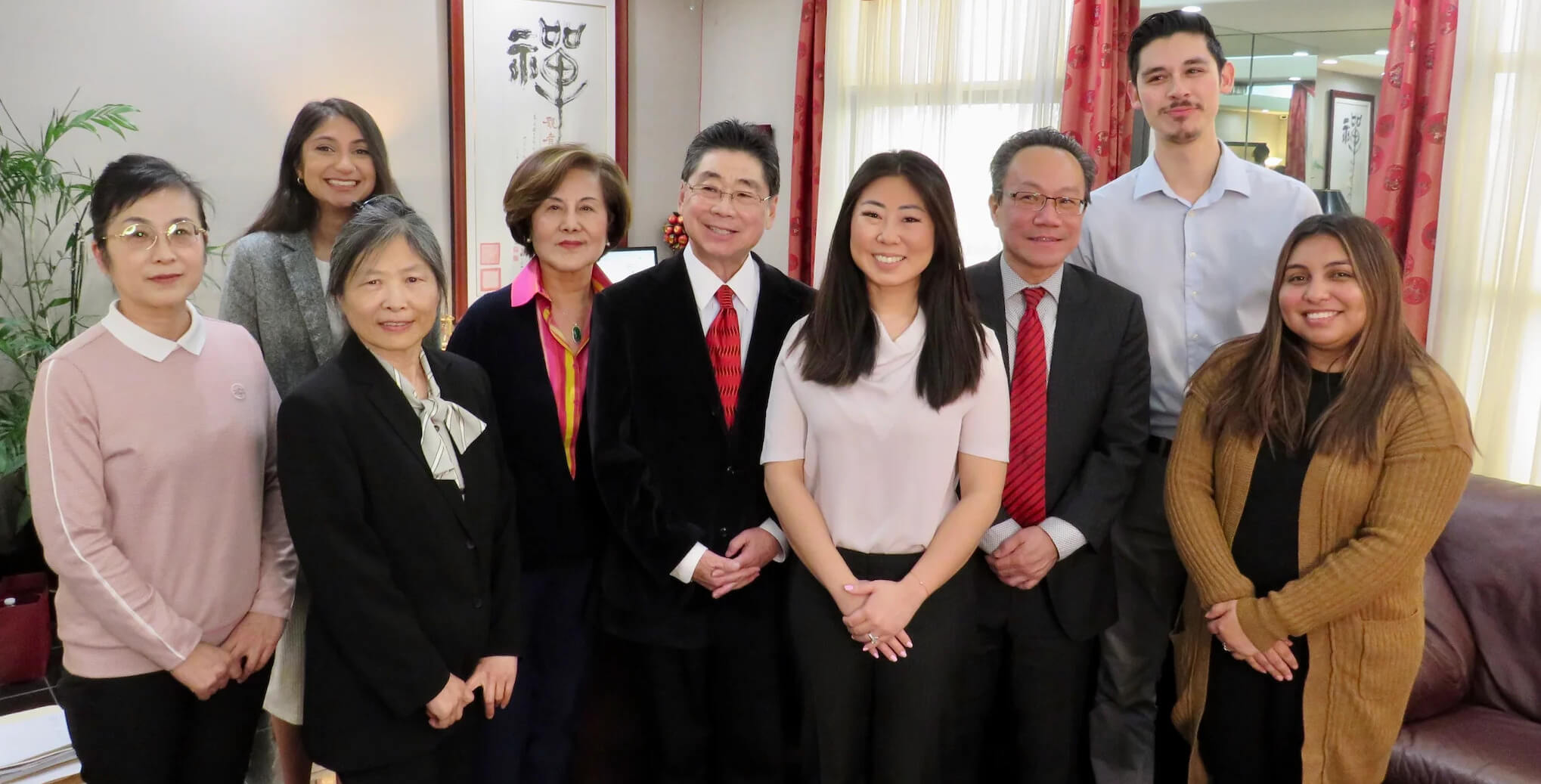
Why Choose Us?
-

Unmatched Expertise
Trust in Peter Chu's 75+ years of collective experience to guide you through complex immigration matters.
-

Tailored Solutions
Our personalized strategies adapt to your unique circumstances, ensuring we meet your specific immigration needs.
-

Proven Success
Benefit from our solid track record in achieving favorable outcomes in various immigration cases across San Diego.
-

Dedicated Service
Experience our client-first approach that ensures constant support and guidance throughout your immigration journey.


Get clear, expert legal guidance tailored to your visa, green card, or citizenship needs.

Inquire now to check if you qualify
K-3 Spouse Visa vs. IR-1/CR-1 Immigrant Visa: Which Path Fits Sunnyvale Families?
Sunnyvale families separated by immigration status face a decision: file only the I-130 petition and wait for direct consular processing of an IR-1 or CR-1 immigrant visa, or file both I-130 and I-129F to pursue K-3 status as a temporary bridge. Here's the honest answer: the K-3 visa was designed in an era when I-130 processing times exceeded three years. Today, with I-130 adjudication timelines at many service centers falling below 12 months, the K-3 adds a second petition, a second filing fee, and often minimal time savings. The primary advantage of K-3 filing in 2026 is the ability to reunite in the United States sooner and file for work authorization immediately upon arrival, rather than waiting abroad for the full immigrant visa process to complete. For couples where prolonged separation creates financial hardship or where the foreign spouse has time-sensitive employment opportunities in California, K-3 remains a viable option.
| Factor | K-3 Spouse Visa | IR-1/CR-1 Immigrant Visa | DIY Filing | Professional Assessment |
|---|---|---|---|---|
| Time to U.S. Entry | 9–15 months (dual filing) | 12–18 months (direct consular) | Highly variable. Errors cause delays | K-3 offers modest speed advantage; IR-1 avoids duplicate filing |
| Work Authorization | Available upon I-485 filing after U.S. entry | Immediate upon immigrant visa issuance and entry | Same timelines, but errors risk RFEs | K-3 allows earlier U.S. presence; IR-1 grants work authorization on day one |
| Cost | Two petition fees (I-130 + I-129F) plus adjustment fees | One petition fee plus consular processing | Filing fees only; no attorney review | K-3 costs more; IR-1 is more cost-efficient for straightforward cases |
| Approval Certainty | Dependent on bona fide marriage evidence at two stages | Single adjudication at consular interview | High error rate increases denial risk | IR-1 offers cleaner pathway; K-3 adds procedural complexity |
Frequently Asked Questions
Find answers to common questions about our services
-
K-3 visa processing involves two stages: USCIS adjudication of Form I-129F (typically 6–9 months at the California Service Center as of 2026) and consular processing abroad (3–6 months depending on the country). Total timeline from I-129F filing to U.S. e
-
No. A K-3 visa alone does not grant employment authorization. However, once your spouse enters the United States on K-3 status and you file Form I-485 (adjustment of status), they become eligible to file Form I-765 for an Employment Authorization Document
-
A K-3 petition requires Form I-129F, proof that Form I-130 was previously filed (the I-797 receipt notice), evidence of a bona fide marriage (joint financial documents, photographs, correspondence), a copy of the marriage certificate, and Form I-134 Affid
-
It depends on your specific timeline and circumstances. If your I-130 petition is already well into processing and likely to be approved within 6–9 months, filing a separate K-3 petition may add cost and procedural complexity without meaningfully shorteni
-
Consular denial of a K-3 visa. Typically due to ineligibility under INA Section 212(a) grounds such as prior immigration violations, criminal history, or insufficient evidence of a bona fide marriage. Does not automatically terminate the underlying I-130
-
Yes. If your spouse is lawfully present in the United States on a valid nonimmigrant visa (e.g., B-2 visitor, F-1 student, H-1B worker), you can file both I-130 and I-129F petitions, though the practical benefit of K-3 filing is reduced. If your spouse's
-
Attorney fees for K-3 petition preparation and consular processing guidance typically range from $2,500 to $4,500 depending on case complexity, the need for waiver applications, and whether the case involves prior immigration violations or RFEs. This is s
-
The K-1 visa is for foreign fiancé(e)s who will marry the U.S. petitioner after entering the United States; the K-3 visa is for foreign spouses already legally married to the U.S. petitioner who are waiting for immigrant visa processing to complete. Both
Need Personalized Immigration Guidance?

