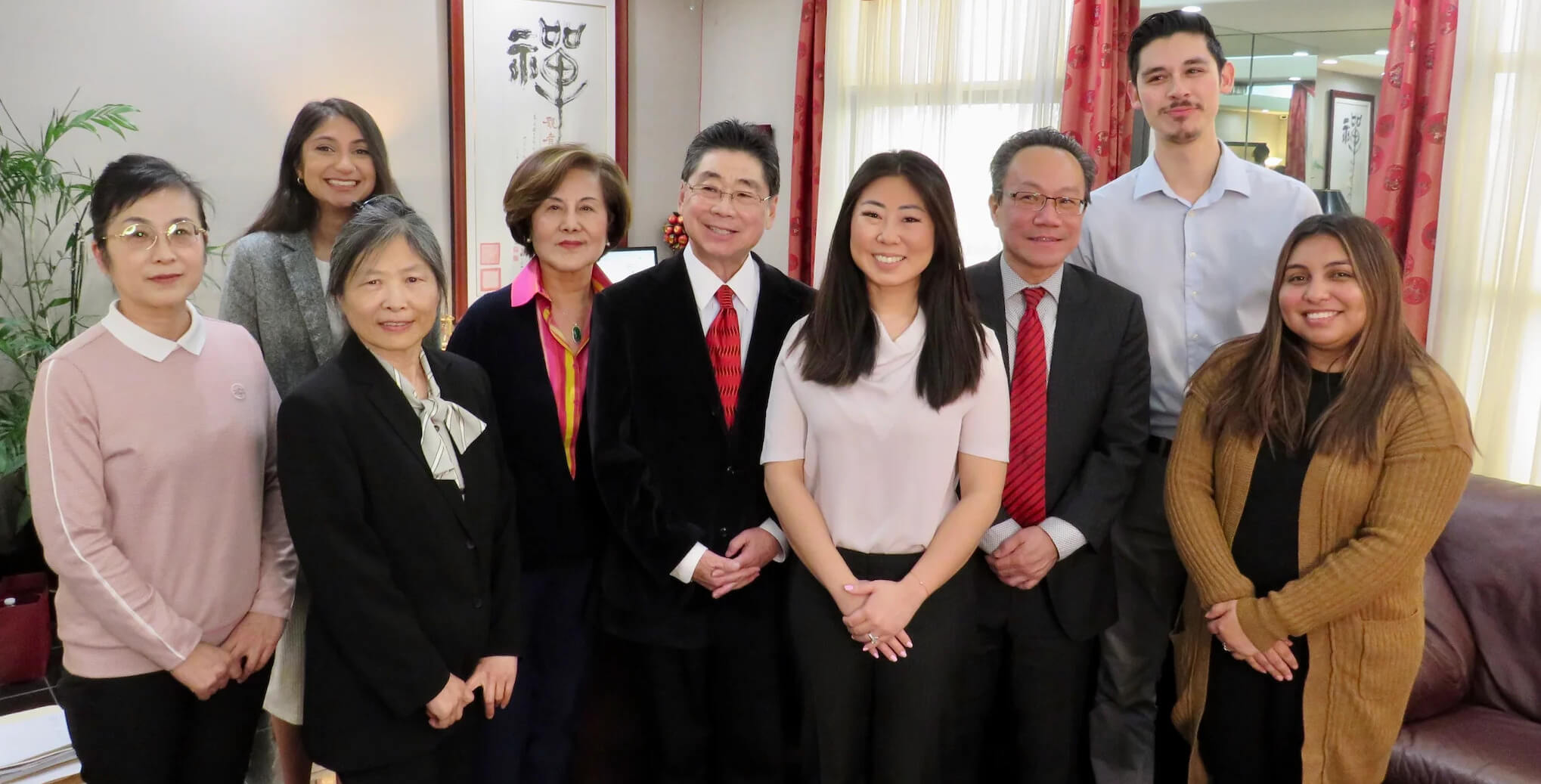

Why Choose Us?

  • Unmatched Expertise

    Trust in Peter Chu's 75+ years of collective experience to guide you through complex immigration matters.

  • Tailored Solutions

    Our personalized strategies adapt to your unique circumstances, ensuring we meet your specific immigration needs.

  • Proven Success

    Benefit from our solid track record in achieving favorable outcomes in various immigration cases across San Diego.

  • Dedicated Service

    Experience our client-first approach that ensures constant support and guidance throughout your immigration journey.

Tulare County processed over 2,800 family-based immigration petitions in 2024, making it one of the Central Valley's most active family reunification venues. Where timing and procedural precision directly impact how quickly spouses can reunite. For Tulare residents navigating K-3 spouse visa applications, the difference between a 6-month approval and a 14-month delay often comes down to whether the I-129F petition and supporting evidence were prepared by a licensed immigration attorney before submission. Law office of Peter Darwin Chu has served Tulare, CA families since 2008, handling K-3 spouse visa cases for couples separated by international borders.

Book a Consultation

Law office of Peter Darwin Chu provides K-3 lawyer Tulare services to residents throughout Tulare County. Licensed under the California State Bar with representation for I-129F petitions, consular processing support, and same-week case evaluations. We guide U.S. citizen petitioners and their foreign spouses through every procedural step from petition filing to visa interview preparation, eliminating the costly errors that delay family reunification.

K-3 Lawyer Tulare Available Across Tulare and Surrounding Areas

Law office of Peter Darwin Chu represents clients throughout Tulare and Tulare County. Including neighborhoods across zip codes 93274 and 93275. Serving families in East Tulare, Tule Vista, and Mission Valley. All K-3 spouse visa work is handled by California-licensed attorneys familiar with USCIS California Service Center procedures and the U.S. consulate processing timelines that directly affect Tulare County couples. Residents of surrounding communities in Visalia, Porterville, and Hanford are also eligible for representation.

What Tulare Residents Can Access

I-129F Petition Preparation and Filing

The Form I-129F Petition for Alien Fiancé(e) is the required first step for K-3 spouse visa cases, filed by the U.S. citizen petitioner with USCIS. In Tulare, where many families work in agriculture and may have limited English proficiency, a single documentation error. Missing translations, incomplete employment history, or insufficient proof of bona fide marriage. Can trigger a Request for Evidence (RFE) that adds 4–6 months to processing time. We prepare the I-129F with complete evidentiary exhibits, verified translations, and the legal arguments that satisfy USCIS adjudication standards.

Consular Processing Support

Once USCIS approves the I-129F, the case transfers to the National Visa Center and then to the U.S. consulate in the foreign spouse's home country for the visa interview. For Tulare families, coordinating with consulates in Mexico City, Manila, or New Delhi. Each with unique procedural requirements and waiting times. Requires precise documentation submission and interview preparation. We provide country-specific consular guides, document checklists, and interview coaching that reduce denial risk.

K-3 to Adjustment of Status Strategy

Many K-3 applicants in Tulare choose to file for adjustment of status (Form I-485) after entering the U.S., converting from K-3 nonimmigrant status to lawful permanent resident without returning to their home country. This dual-track strategy requires careful timing: filing the I-485 too early can void K-3 travel benefits, while waiting too long extends the period of employment ineligibility. We evaluate each couple's timeline and advise on the optimal adjustment filing window.

Ir-1 Spouse Visa Alternative Analysis

For many Tulare couples, the IR-1 immigrant visa (immediate relative spouse visa) is a faster and more permanent alternative to the K-3 nonimmigrant visa. The K-3 category was designed to reduce separation time, but current processing delays have eroded that advantage. Many IR-1 cases now complete in comparable timeframes without requiring a separate adjustment of status filing after arrival. We compare both pathways based on your case-specific factors and USCIS processing trends.

Get clear, expert legal guidance tailored to your visa, green card, or citizenship needs.

Trusted K-3 Immigration Representation in Tulare, CA

Law office of Peter Darwin Chu maintains all required California State Bar licenses and complies with American Immigration Lawyers Association (AILA) ethical standards governing attorney-client privilege, conflict-of-interest disclosure, and fee transparency. We have represented Tulare County families in K-3 spouse visa cases since 2008, with documented experience in consular processing across 15+ countries. All case evaluations include written fee agreements specifying scope of representation, payment schedules, and the services covered. No hidden costs or surprise billing for document amendments.

Inquire now to check if you qualify

What if my spouse is already in the U.S. on a tourist visa — can we still apply for a K-3 visa in Tulare?

If your spouse is physically present in the United States on a B-1/B-2 tourist visa or visa waiver, filing a K-3 petition is procedurally unnecessary. You should instead file Form I-130 (Petition for Alien Relative) and Form I-485 (Adjustment of Status) concurrently while your spouse is in the U.S. The K-3 visa category was designed for spouses waiting abroad, not for those already present. Attempting to file a K-3 for someone in the U.S. will trigger USCIS guidance to use the adjustment process instead. Tulare couples in this situation benefit from consulting an immigration lawyer to evaluate whether your spouse's current status allows adjustment or whether departing the U.S. and consular processing is required to avoid unlawful presence issues.

What if USCIS issues a Request for Evidence on our K-3 petition filed from Tulare?

A Request for Evidence (RFE) means USCIS needs additional documentation or clarification before approving your I-129F petition. Common RFE topics include insufficient proof of bona fide marriage, missing translations, or unclear petitioner income documentation. In Tulare, where many couples have cross-border relationships with limited joint financial accounts or co-residence history, assembling persuasive RFE responses requires strategic evidence selection: affidavits from witnesses who observed the relationship, detailed timelines of in-person visits, and financial records showing mutual support. You have 87 days from the RFE issue date to respond. Failure to respond by the deadline results in automatic petition denial. A K-3 lawyer in Tulare can draft the RFE response with legal arguments and evidentiary exhibits that directly address USCIS concerns.

What if the U.S. consulate denies my spouse's K-3 visa interview in their home country?

Consular visa denials are governed by Section 221(g) (administrative processing for missing documents) or Section 212(a) (inadmissibility grounds such as prior immigration violations, criminal history, or health-related issues). If your spouse's K-3 visa is denied, the consular officer must provide a written explanation citing the legal basis. This explanation determines your options. A 221(g) refusal is often curable by submitting additional documentation; a 212(a) inadmissibility finding may require a waiver (Form I-601) filed with USCIS before the consulate can issue the visa. For Tulare families, appealing or overcoming a consular denial requires understanding whether the issue is documentary, legal, or factual. We review denial notices and advise on waiver eligibility, motion to reconsider procedures, and alternative visa pathways.

What if my spouse enters the U.S. on a K-3 visa but we decide to divorce before adjustment of status?

If you divorce after your spouse enters the U.S. on a K-3 visa but before filing or completing adjustment of status, your spouse loses eligibility for the green card based on that marriage. The K-3 visa is a nonimmigrant status tied to the pending I-130 petition. Divorce invalidates the underlying petition and terminates K-3 status. Your spouse would be required to depart the U.S. or seek an alternative immigration status (such as a new employer-sponsored visa) to remain lawfully. In Tulare, where family circumstances change, consulting an immigration attorney before finalizing divorce can clarify the immigration consequences and explore whether legal separation (rather than divorce) preserves status during reconciliation attempts.

Choosing a K-3 Spouse Visa Strategy in Tulare: What Are Your Options?

Tulare couples pursuing family reunification have three main paths: hiring a licensed K-3 immigration lawyer, using an online DIY immigration service, or filing the I-129F petition without legal assistance. Here's the honest answer: K-3 petitions are procedurally simpler than employment-based visas, but they are not error-proof. A missing affidavit, incorrect beneficiary address, or incomplete marriage certificate translation can trigger an RFE that adds months to processing. Online services provide form templates but no legal review of case-specific issues like prior visa denials, overstays, or criminal history that affect eligibility. Self-filing works for straightforward cases with no complicating factors, but it provides no defense if USCIS or the consulate questions the bona fides of your marriage.

OptionProcedural AccuracyRFE Response SupportConsular Denial DefenseProfessional Assessment
Licensed K-3 lawyerI-129F reviewed by attorney; evidence strategy tailored to caseAttorney drafts legal arguments; coordinates with USCISWaiver eligibility analysis; motion to reconsiderBest for cases with prior immigration issues, complex evidence, or high denial risk
Online DIY serviceForm auto-populated; no legal review of supporting documentsGeneric RFE templates; no attorney representationNo consular appeal supportSuitable only for straightforward cases with no complicating history
Self-filingPetitioner completes forms using USCIS instructionsPetitioner responds to RFE without legal guidanceNo professional consular defenseHigh risk if any eligibility questions exist

Law office of Peter Darwin Chu provides full-service K-3 representation from I-129F filing through green card issuance, with transparent fee agreements and no hidden charges for RFE responses or consular coordination.

Get in touch

Frequently Asked Questions

Find answers to common questions about our services

  • Current K-3 processing times vary by USCIS service center and consular post, but Tulare petitioners filing with the California Service Center typically see I-129F approval in 8–12 months, followed by National Visa Center processing (2–3 months) and consul

  • The I-129F petition requires proof of U.S. citizenship (passport or birth certificate), proof of valid marriage (marriage certificate with certified English translation if issued abroad), evidence of any prior marriages terminating in divorce or death, tw

  • Yes, K-3 visa holders are eligible to apply for employment authorization by filing Form I-765 (Application for Employment Authorization Document) after entering the United States. Processing time for the EAD is typically 3–5 months, during which the K-3 s

  • The K-3 is a nonimmigrant visa allowing the foreign spouse to enter the U.S. while the I-130 immigrant petition is pending. Once in the U.S., the spouse files for adjustment of status to become a permanent resident. The IR-1 is an immigrant visa processed

  • If USCIS approves your I-130 immigrant petition before the consulate schedules the K-3 visa interview, the consular officer will typically convert the case to an IR-1 immigrant visa interview instead of proceeding with the K-3. This is generally advantage

  • Consular visa denials under Section 212(a) inadmissibility grounds cannot be appealed in the traditional sense, but you can request consular reconsideration by submitting additional evidence or file a waiver (such as Form I-601 for fraud, misrepresentatio

  • The I-129F petition itself does not require an Affidavit of Support (Form I-864), but the foreign spouse will need a completed I-864 from the U.S. petitioner before the consular interview or adjustment of status filing. The petitioner must demonstrate inc

  • Once your spouse enters the U.S. on a K-3 visa, departing the country before filing for adjustment of status or receiving advance parole (Form I-131) can abandon the K-3 status and complicate reentry. If your spouse must travel internationally. For family

Need Personalized Immigration Guidance?

Law office of Peter Darwin Chu provides k-3 lawyer tulare services to Tulare County residents through licensed California immigration attorneys, offering I-129F petition preparation, consular processing coordination, and same-week case evaluations with transparent flat-fee pricing.

Related Immigration Services for Tulare Families

If you are exploring K-3 spouse visa options in Tulare, you may also benefit from our Ir-1 Spouse Visa services for couples seeking permanent residence without a separate adjustment filing, our Immigrant Visas guidance covering all family-based green card categories, and our Citizenship representation for spouses eligible to naturalize after three years of marriage to a U.S. citizen. For nonimmigrant work visa needs, explore our O-1 Visa Lawyer San Diego, Expert H-1 Visa Lawyer San Diego, and E-1 Visa Lawyer San Diego pages. Tulare families navigating multiple visa pathways benefit from consulting an attorney who can evaluate all options and recommend the fastest, most cost-effective strategy for your specific circumstances.

Speak With Us Today