
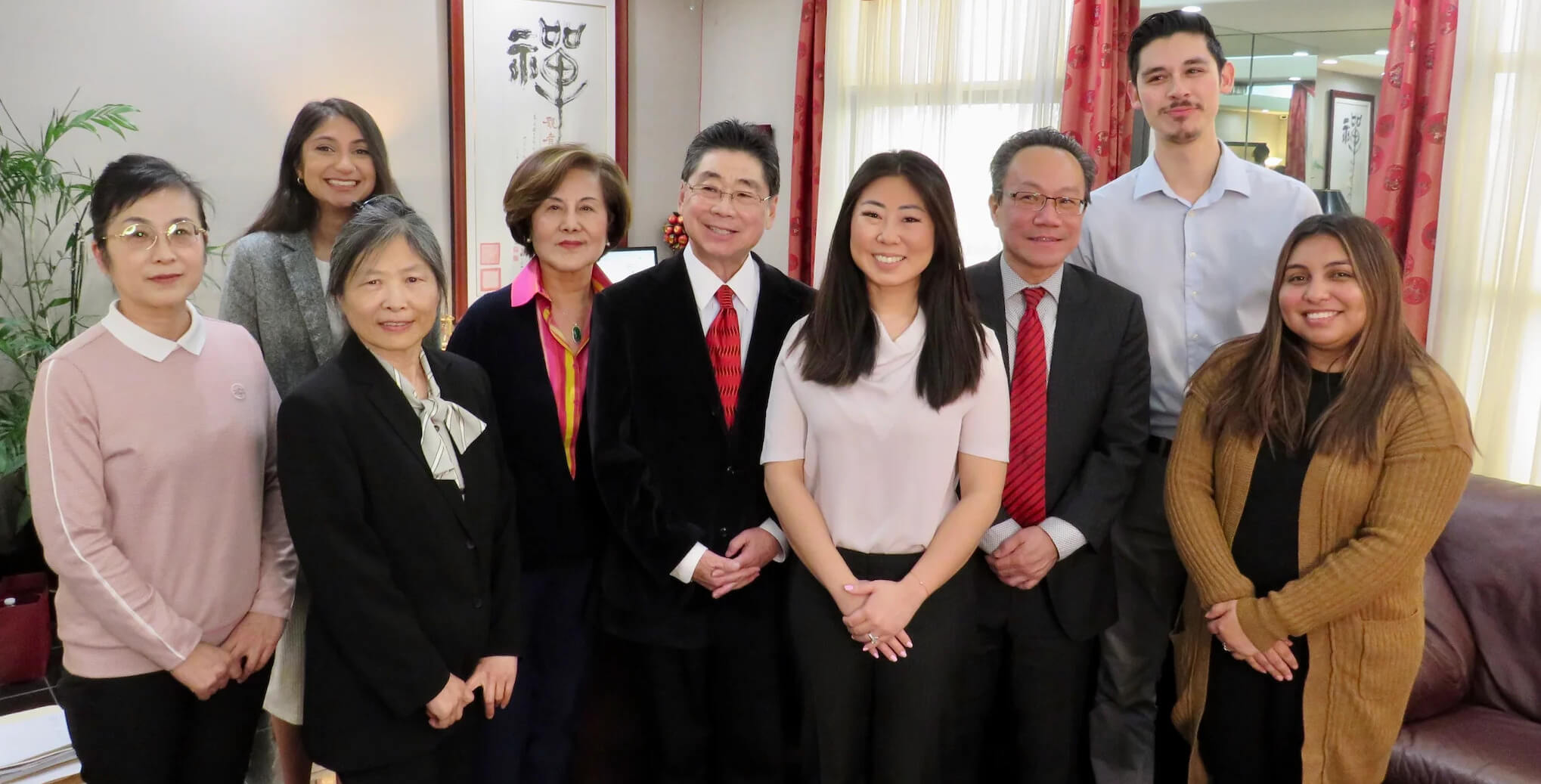
Why Choose Us?
-

Unmatched Expertise
Trust in Peter Chu's 75+ years of collective experience to guide you through complex immigration matters.
-

Tailored Solutions
Our personalized strategies adapt to your unique circumstances, ensuring we meet your specific immigration needs.
-

Proven Success
Benefit from our solid track record in achieving favorable outcomes in various immigration cases across San Diego.
-

Dedicated Service
Experience our client-first approach that ensures constant support and guidance throughout your immigration journey.


Get clear, expert legal guidance tailored to your visa, green card, or citizenship needs.

Inquire now to check if you qualify
K-3 Visa vs. Direct CR-1 Immigrant Visa Processing: Which Reunites Yorba Linda Families Faster?
Families often ask whether filing a K-3 spouse visa or waiting for direct CR-1/IR-1 immigrant visa processing is the better strategy. The answer depends on timing, consular post workload, and your family's tolerance for uncertainty. Here's the honest answer: K-3 was designed in 2000 to speed reunification when I-130 processing took years, but USCIS processing times have improved significantly, and in many cases today, direct CR-1 processing is faster than K-3 from petition to U.S. entry. Especially when the I-130 has already been approved. K-3 makes strategic sense primarily when the I-130 is still pending with a long projected processing time and the couple wants to initiate consular processing in parallel. For Yorba Linda families, we model both timelines before recommending a path.
| Factor | K-3 Spouse Visa | Direct CR-1/IR-1 Visa | Professional Assessment |
|---|---|---|---|
| Processing Path | I-130 filed → I-129F filed after I-130 receipt → NVC → Consular interview → K-3 entry → I-485 adjustment | I-130 filed → I-130 approved → NVC → Consular interview → Immigrant visa issued → Permanent resident entry | K-3 adds an extra petition and requires post-entry adjustment; CR-1 confers green card at entry |
| Work Authorization | Must file I-765 after U.S. entry; 3-6 month wait for EAD approval | Immediate upon entry as permanent resident | CR-1 eliminates work authorization gap entirely |
| Total Timeline | 10-18 months (I-129F + consular + adjustment) | 12-16 months (I-130 + NVC + consular) | K-3 is rarely faster today; most reunifications occur via CR-1 before K-3 completes |
| Cost | I-129F filing fee + consular fees + I-485 adjustment fees = $3,000-$4,500 total | I-130 filing fee + consular fees = $1,500-$2,200 total | K-3 costs nearly double due to two-petition structure |
Frequently Asked Questions
Find answers to common questions about our services
-
K-3 processing time varies by consular post but typically ranges from 10 to 18 months from I-129F filing to U.S. entry. This includes USCIS review of the I-129F petition (4-8 months), National Visa Center case creation and document review (2-4 months), an
-
No. K-3 status does not confer automatic work authorization. Your spouse must file Form I-765 (Application for Employment Authorization) after entering the U.S., and USCIS typically takes 3 to 6 months to approve the application and issue an Employment Au
-
K-3 is a nonimmigrant visa that allows your spouse to enter the U.S. while the I-130 immigrant petition is pending, with the expectation that they will file for adjustment of status (Form I-485) after entry. CR-1 (or IR-1 if married over two years) is an
-
You are not legally required to hire an immigration attorney to file a K-3 petition, but the procedural coordination required. Filing I-129F only after I-130 receipt, ensuring consular document accuracy, and managing the transition from K-3 entry to adjus
-
If your underlying I-130 immigrant petition is denied, your pending I-129F K-3 petition is automatically invalidated because K-3 eligibility is derivative of an approved or pending I-130. USCIS will deny the I-129F once the I-130 denial is entered into th
-
Yes, but only if your spouse has applied for and received advance parole (Form I-131) before departing. K-3 status itself is a nonimmigrant classification that does not grant automatic reentry rights once your spouse leaves the U.S., and if they depart wi
-
Attorney fees for K-3 petition preparation and filing typically range from $1,500 to $3,000 depending on case complexity, plus government filing fees of $535 for I-129F and $1,760 for subsequent I-485 adjustment of status. Self-filing eliminates attorney
-
Your spouse must bring to the K-3 consular interview: a valid passport, DS-160 confirmation page, interview appointment letter, two passport-style photos, original marriage certificate (and certified translation if not in English), police certificates fro
Need Personalized Immigration Guidance?

