
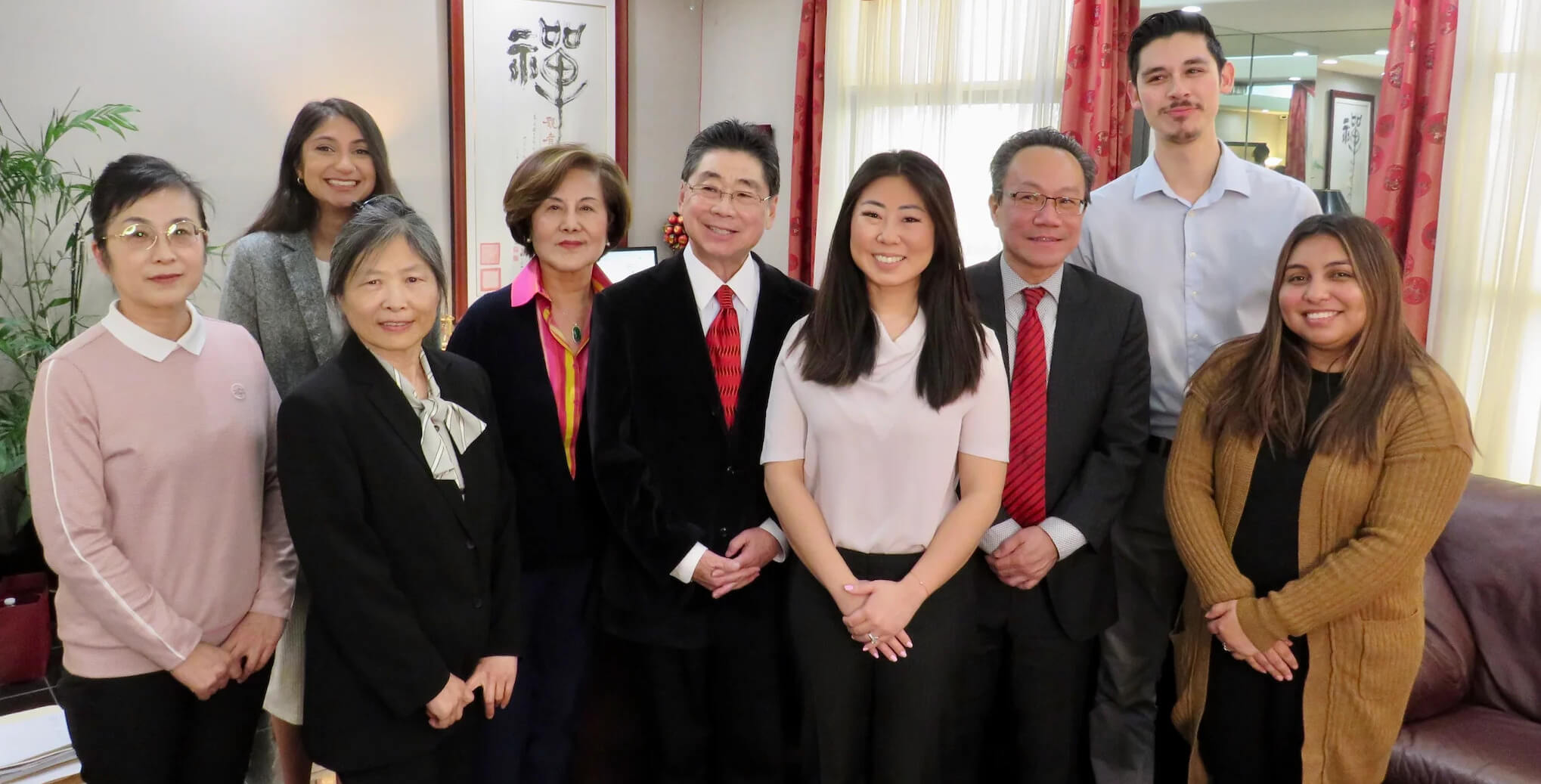

Why Choose Us?

  • Unmatched Expertise

    Trust in Peter Chu's 75+ years of collective experience to guide you through complex immigration matters.

  • Tailored Solutions

    Our personalized strategies adapt to your unique circumstances, ensuring we meet your specific immigration needs.

  • Proven Success

    Benefit from our solid track record in achieving favorable outcomes in various immigration cases across San Diego.

  • Dedicated Service

    Experience our client-first approach that ensures constant support and guidance throughout your immigration journey.

Placentia's growing technology and healthcare sectors have contributed to a 12% increase in professional visa applications over the past three years, with O-1A extraordinary ability petitions representing the most complex category requiring specialized evidentiary documentation. For professionals across Old Town, Atwood, and Bradford neighborhoods seeking O-1A attorney Placentia representation, the difference between approval and denial often comes down to how your sustained acclaim evidence is structured before USCIS review. Law office of Peter Darwin Chu has prepared O-1A petitions for Placentia, CA residents across scientific research, entrepreneurial innovation, and medical specialties — handling every case under California State Bar admission standards with documentation strategies tailored to extraordinary ability classification.

Book a Consultation

Law office of Peter Darwin Chu is a California-licensed immigration law firm serving Placentia residents with O-1A extraordinary ability visa petitions — offering substantive case assessments, evidentiary documentation reviews, and representation before USCIS with no upfront retainer for qualified applicants. Our O-1A attorney Placentia practice focuses exclusively on nonimmigrant visa petitions requiring proof of sustained national or international acclaim in sciences, education, business, or athletics.

O-1A Attorney Placentia Available Across Placentia and Surrounding Areas

Law office of Peter Darwin Chu represents clients throughout Placentia and Orange County — including Old Town, Atwood, Bradford, and Kraemer neighborhoods across zip codes 92670, 92870, and 92871. All California residents with qualifying extraordinary ability claims are eligible for O-1A consultation regardless of current visa status or county of residence.

What Placentia Residents Can Access

O-1A Extraordinary Ability Petition Preparation

O-1A classification requires meeting at least three of eight regulatory criteria under 8 CFR 214.2(o)(3)(iii) — including evidence of major awards, published material about your work, original contributions of major significance, or judging the work of others in your field. Our Placentia practice conducts criterion-by-criterion assessments before filing, identifying which evidentiary categories your professional history supports and what supplemental documentation strengthens your sustained acclaim showing. We prepare advisory opinion request letters, compile citation indices, and draft expert recommendation letters that address the specific language USCIS adjudicators use in Request for Evidence (RFE) denials.

O-1A Extension and Change of Employer Petitions

O-1A status is employer-specific and issued in increments up to three years, with unlimited one-year extensions available if you continue to work in your area of extraordinary ability. Placentia professionals changing employers or extending current O-1A status require new Form I-129 filings with updated itineraries and continued acclaim evidence — a process Law office of Peter Darwin Chu handles with same evidentiary standards as initial petitions. We advise on timing to avoid employment gaps and whether concurrent H-1B or other visa filings provide strategic backup during O-1A processing.

O-1 Visa Guidance Across Practice Areas

Whether your extraordinary ability claim is based on research citations in scientific journals, entrepreneurial ventures with measurable industry impact, or clinical innovations in healthcare delivery, our O-1A attorney Placentia counsel tailors documentation to your specific field's standards of acclaim. We collaborate with industry experts to draft advisory opinions that address how your work meets the 'small percentage at the top' standard USCIS applies in O-1A adjudications.

Get clear, expert legal guidance tailored to your visa, green card, or citizenship needs.

Licensed California Immigration Counsel

Law office of Peter Darwin Chu maintains active admission to practice before the California State Bar and is authorized to represent clients before U.S. Citizenship and Immigration Services (USCIS), the Executive Office for Immigration Review (EOIR), and the Board of Immigration Appeals (BIA). We carry professional liability coverage as required under California Rules of Professional Conduct Rule 1.15 and provide written fee agreements disclosing all costs before representation begins. Our Placentia O-1A practice operates under the ethical standards governing immigration attorney conduct, including confidentiality obligations that extend beyond attorney-client privilege to protect your visa application strategy and personal information from disclosure.

Inquire now to check if you qualify

What If I Don't Have a Major International Award — Can I Still Qualify for O-1A Status in Placentia?

Yes — the major award criterion (Nobel Prize, Oscar, Olympic Medal) is just one of eight possible pathways to O-1A classification, and meeting any three of the remaining seven criteria satisfies the regulatory standard. Most successful O-1A petitions filed from Placentia rely on evidence of published material about your work in professional journals, membership in associations requiring outstanding achievement, or original contributions of major significance to your field — documentation our firm assembles through citation analysis, media coverage compilation, and expert letters that translate your professional accomplishments into USCIS regulatory language. The critical distinction is sustained acclaim: one-time achievements rarely suffice, but consistent recognition over multiple years across your industry meets the standard.

What If My Field Doesn't Have Traditional 'Judging' Roles — How Do I Prove Peer Review in Placentia?

Peer review for O-1A purposes extends beyond formal judging panels to include manuscript review for academic journals, grant application scoring, conference abstract selection, or technical review of industry standards — activities many Placentia professionals perform without recognizing them as USCIS-qualifying evidence. Law office of Peter Darwin Chu requests confirmation letters from journal editors, program chairs, and standards bodies documenting your review activities, the selectivity of reviewer appointment, and the number of submissions you evaluated. Even informal peer consultation — if documented through email requests for technical input or collaborative problem-solving — can support this criterion when presented with proper context about why your expertise was specifically sought.

What If I'm Currently on H-1B in Placentia — Can I File O-1A Without Losing My Current Status?

Yes — O-1A petitions are filed as new nonimmigrant classifications and do not invalidate existing H-1B status during processing. Many Placentia professionals file O-1A petitions while maintaining H-1B employment, requesting a change of status effective upon approval or choosing consular processing to preserve H-1B validity if the O-1A petition is denied. Our practice advises on strategic timing: filing O-1A before your H-1B sixth-year limit approaches provides a backup pathway if you later encounter green card priority date delays, since O-1A has no maximum duration limit and can be extended indefinitely in one-year increments as long as extraordinary ability continues.

What If USCIS Issues a Request for Evidence (RFE) on My O-1A Petition Filed from Placentia?

RFE response is critical — USCIS grants a fixed deadline (typically 87 days) to submit additional evidence addressing specific deficiencies identified in the RFE notice, and failure to respond results in automatic petition denial. Law office of Peter Darwin Chu treats RFE response as a new filing: we obtain supplemental expert letters addressing the adjudicator's specific concerns, compile additional citations or media coverage that may have been published since the original filing, and draft point-by-point legal briefs citing precedent decisions and policy memos that support your qualification under the criteria USCIS questioned. Most RFEs in O-1A cases challenge whether your achievements rise to 'sustained national or international acclaim' — a subjective standard we address through comparative evidence showing how your recognition compares to typical professionals in your field.

O-1A Attorney vs. General Immigration Practitioner vs. DIY Filing

Placentia professionals evaluating O-1A representation face three paths: specialized O-1A counsel, general immigration attorneys handling multiple visa categories, or self-filed petitions using online templates. General immigration practitioners charge similar fees to O-1A specialists but lack the criterion-specific documentation strategies and RFE response experience that determine approval in extraordinary ability cases — they file competent paperwork but rarely understand how to position sustained acclaim evidence in the language USCIS adjudicators require. DIY filings save attorney fees but consistently underestimate the evidentiary burden: USCIS approval rates for self-filed O-1A petitions are 30–40% lower than attorney-represented filings according to USCIS Statistical Yearbook data, primarily because pro se applicants misidentify which regulatory criteria their achievements satisfy and fail to obtain properly structured advisory opinions.

Here's the honest answer: O-1A petitions are not H-1B applications with stricter evidence standards — they are extraordinary ability classifications that require proving you are among the small percentage at the top of your field, a showing that demands industry-specific documentation strategies most general practitioners have never developed and DIY filers cannot objectively assess about their own accomplishments.

| Approach | Criterion Assessment | Advisory Opinion Quality | RFE Response Experience | Professional Assessment |
|---|---|---|---|
| O-1A Specialized Counsel | Field-specific evidentiary analysis identifying strongest three+ criteria before filing | Industry expert letters addressing 'small percentage at top' standard with comparative evidence | Precedent-based legal briefs citing AAO decisions and policy memos specific to your field | Highest approval rate pathway — critical for professionals without major international awards |
| General Immigration Attorney | Checklist compliance across all eight criteria without strategic prioritization | Template recommendation letters from colleagues without sustained acclaim context | Generic supplemental evidence submissions without legal argument addressing adjudicator concerns | Competent filing but limited extraordinary ability specialization |
| Self-Filed Petition | Self-assessment of achievements without objective comparison to field standards | Personal statements or unstructured letters that fail regulatory language requirements | No legal strategy — additional evidence only, no argument addressing USCIS reasoning | 30–40% lower approval rate — suitable only for applicants with unambiguous major awards |

Get in touch

Frequently Asked Questions

Find answers to common questions about our services

  • Standard O-1A processing through USCIS California Service Center averages 2–4 months from filing to decision, though premium processing (Form I-907 with additional $2,805 fee as of 2026) guarantees 15-calendar-day adjudication. Processing timelines can ex

  • USCIS does not publish approval rates by state or service center, but national O-1A approval rates have ranged from 84–91% over the past five years according to USCIS Statistical Yearbook data — significantly higher than H-1B specialty occupation petition

  • O-1A principal applicants can bring spouses and unmarried children under 21 on derivative O-3 nonimmigrant status, which is filed either concurrently with the primary O-1A petition or afterward as a separate Form I-539 change/extension of status applicati

  • Sustained acclaim requires demonstrating consistent national or international recognition over multiple years, typically proven through published articles about your work in major media or professional journals, citations of your research by other experts

  • Yes — O-1A petitions require a U.S. employer or agent to file Form I-129 on your behalf, establishing that you will work in your area of extraordinary ability for the petitioning entity. The petitioner can be a traditional employer with an offer letter an

  • O-1A petition denials can be appealed to the USCIS Administrative Appeals Office (AAO) within 33 days of the decision, though appeal success rates are low and processing takes 12–18 months. More commonly, denied applicants refile new O-1A petitions with s

  • Changing employers on O-1A status requires the new employer to file a completely new Form I-129 petition with the same extraordinary ability evidence and updated employment itinerary — O-1A status is employer-specific and does not port like H-1B. You cann

  • O-1A attorney fees in Southern California typically range from $5,000–$12,000 for initial petition preparation, varying based on case complexity, number of evidentiary criteria requiring documentation, and whether advisory opinions must be obtained from m

Need Personalized Immigration Guidance?

Law office of Peter Darwin Chu provides O-1A attorney Placentia representation for California professionals seeking extraordinary ability visa classification — offering criterion-specific evidentiary assessments, advisory opinion coordination, and USCIS petition preparation with RFE response experience across scientific, business, and healthcare fields.

Placentia residents exploring O-1A classification often benefit from understanding related visa pathways and immigration processes. Our O-1 Visa Lawyer San Diego practice serves Orange County professionals with both O-1A and O-1B petition preparation, while our O-1 – Extraordinary Ability Visas overview page details the regulatory criteria and evidentiary standards USCIS applies across all extraordinary ability classifications. For professionals evaluating alternative nonimmigrant pathways, our H-1b – Specialty Occupation Visas and E-2 – Treaty Investor Visas guidance pages compare eligibility requirements and strategic timing considerations. Entrepreneurs and investors may also review our EB-1A Visa immigration pathway content for permanent residence options that build on O-1A extraordinary ability evidence. Our O-1 Visa San Diego and O-1 Visa Guidance resources provide additional case strategy insights for Southern California applicants.

Speak With Us Today