
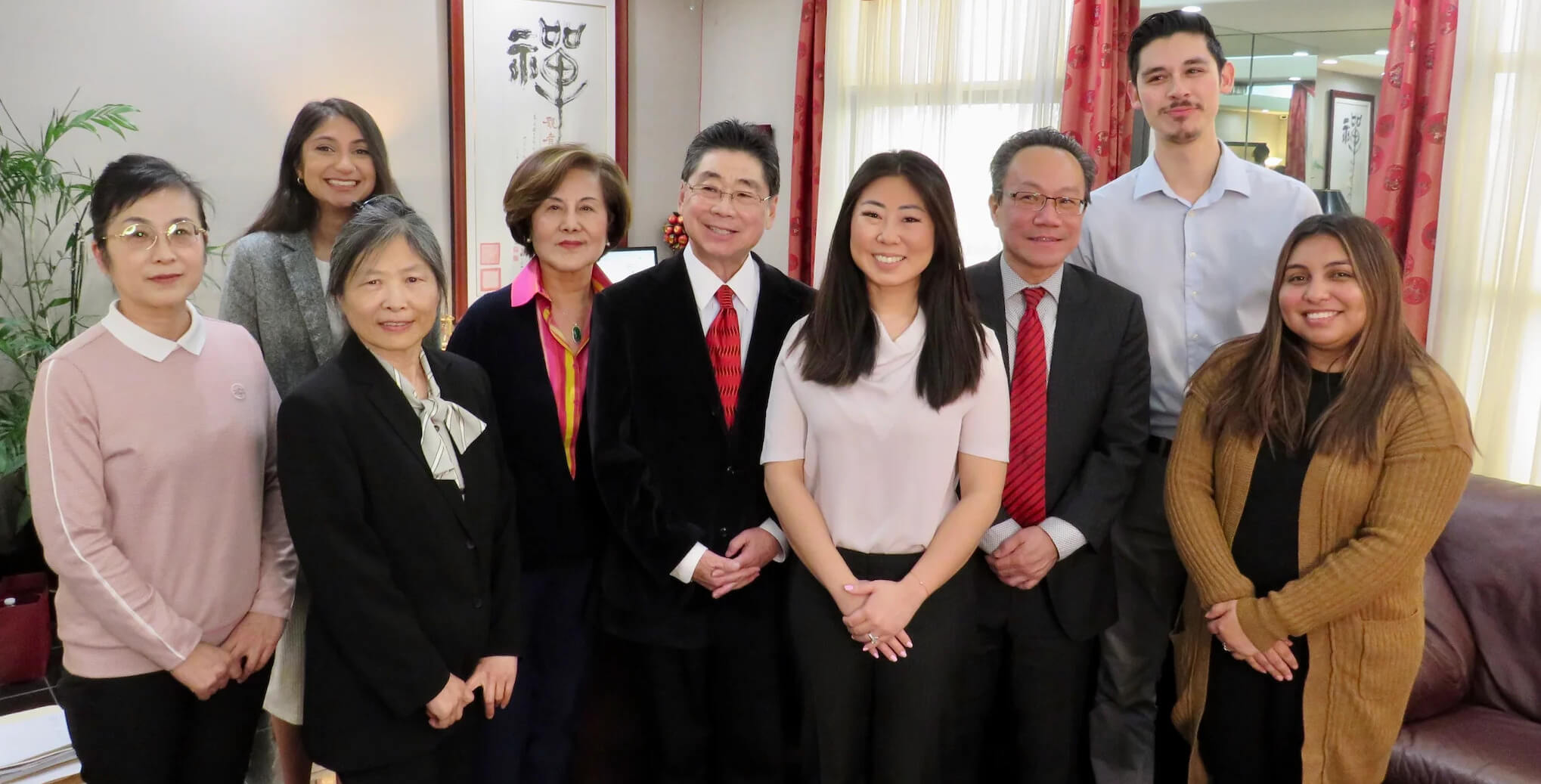

Why Choose Us?

  • Unmatched Expertise

    Trust in Peter Chu's 75+ years of collective experience to guide you through complex immigration matters.

  • Tailored Solutions

    Our personalized strategies adapt to your unique circumstances, ensuring we meet your specific immigration needs.

  • Proven Success

    Benefit from our solid track record in achieving favorable outcomes in various immigration cases across San Diego.

  • Dedicated Service

    Experience our client-first approach that ensures constant support and guidance throughout your immigration journey.

Palo Alto, CA is home to over 2,400 technology startups and research institutions whose foreign-born founders, executives, and researchers frequently qualify for O-1A extraordinary ability classification — yet fewer than 18% of eligible applicants file without first consulting an immigration attorney experienced in USCIS adjudication standards specific to Silicon Valley innovation sectors. For professionals across University South, Downtown, and Professorville navigating the O-1A petition process, the difference between approval and a Request for Evidence often comes down to whether your evidence presentation aligned with the Administrative Appeals Office precedent decisions governing your field. Law Office of Peter Darwin Chu has guided Palo Alto clients through O-1A petitions across technology, venture capital, and academic research sectors.

Book a Consultation

Law Office of Peter Darwin Chu is a California-licensed immigration law firm serving Palo Alto residents seeking O-1A extraordinary ability visa representation — providing consultation, petition drafting, and USCIS response preparation for technology professionals, entrepreneurs, and researchers. Our practice focuses exclusively on employment-based and investment immigration, ensuring every O-1A petition receives attorney review by counsel familiar with Silicon Valley adjudication patterns and AAO precedent standards.

O-1A Lawyer Palo Alto Available Across Palo Alto and Surrounding Areas

Law Office of Peter Darwin Chu represents O-1A visa applicants throughout Palo Alto, CA and surrounding Santa Clara County communities — including University South, Downtown, Professorville, Crescent Park, and Barron Park (zip codes 94301, 94302, 94303, 94304, 94306). All California residents with qualifying extraordinary ability evidence are eligible for representation regardless of current immigration status or employer location.

What Palo Alto O-1A Visa Applicants Can Access

O-1A Petition Drafting and Evidence Strategy

The O-1A classification requires demonstrating extraordinary ability through evidence meeting at least three of eight regulatory criteria under 8 CFR 214.2(o)(3)(iii) — or a one-time major internationally recognized award. For Palo Alto technology professionals, this typically involves strategic presentation of patents, venture funding rounds, peer-reviewed publications, and evidence of original contributions of major significance to your field. We conduct a comprehensive evidence audit before petition filing to identify qualifying documentation and recommend supplemental evidence where regulatory criteria require strengthening. Initial consultations include a preliminary extraordinary ability assessment based on your current achievements.

USCIS Request for Evidence (RFE) Response

Approximately 22% of O-1A petitions receive Requests for Evidence, most commonly questioning whether the applicant's achievements constitute 'extraordinary ability' as opposed to 'above average' competence in the field. RFE responses require targeted legal argument citing Administrative Appeals Office precedent decisions and additional corroborating evidence — typically expert opinion letters from recognized authorities in your field and detailed impact documentation. Law Office of Peter Darwin Chu drafts RFE responses within the statutory deadline with focus on the specific deficiencies identified by the adjudicating officer.

O-1A Extension and Amendment Petitions

O-1A status is approved in increments based on the duration of the event or activity — typically one to three years. Extension petitions require demonstrating that you continue to work in your area of extraordinary ability and that your services remain necessary. Material changes to job duties, employer, or work location require an amended petition filed before the change takes effect. For Palo Alto professionals whose roles evolve rapidly in startup environments, we advise on when amendments are legally required versus discretionary to avoid status violations.

Get clear, expert legal guidance tailored to your visa, green card, or citizenship needs.

Licensed California Immigration Representation

Law Office of Peter Darwin Chu maintains all required California State Bar licenses and adheres to Rules of Professional Conduct governing client trust accounts, conflict screening, and fee disclosure under California Rules of Professional Conduct Rule 1.5. Our practice maintains professional liability coverage and follows American Immigration Lawyers Association ethical guidelines for evidence presentation and USCIS communication. Every O-1A petition undergoes attorney review before filing — we do not delegate substantive legal analysis to paralegals or support staff. Initial consultations are conducted by licensed counsel, not intake coordinators.

Inquire now to check if you qualify

What If My Palo Alto Startup Has Not Yet Achieved Profitability — Can I Still Qualify for O-1A?

Yes — O-1A classification does not require that your employer or your own venture be profitable or revenue-generating. The regulatory criteria focus on your individual extraordinary ability, not your employer's financial performance. For Palo Alto founders and early employees, qualifying evidence typically includes venture capital raised (as evidence of 'critical capacity' and 'high salary'), patents filed, peer recognition through awards or speaking engagements, and evidence of original contributions such as novel algorithms or products that influenced your field. A pre-revenue startup can support an O-1A petition if your individual role meets the extraordinary ability standard.

What If I'm Currently on H-1B Status in Palo Alto — Can I File O-1A Without Leaving?

Yes — O-1A petitions can be filed as a change of status application while you remain in the United States on valid H-1B status, and you can continue working under H-1B authorization while the O-1A petition is pending. If approved, your status changes to O-1A on the date specified in the approval notice without requiring international travel. This is the standard procedure for Palo Alto professionals transitioning from H-1B to O-1A to gain portability advantages or to continue employment after reaching the H-1B six-year limit without an approved immigrant petition.

What If My Palo Alto Employer Won't Sponsor My O-1A Petition?

O-1A petitions require a U.S. employer or agent to file as petitioner — you cannot self-petition. However, if your current Palo Alto employer declines to sponsor, you have two options: secure a new employer willing to file, or work with an immigration agent who files on behalf of multiple end clients. The agent model is common for Palo Alto consultants and contractors working with multiple companies simultaneously. The petition must still demonstrate that your services are needed for a specific event or activity with a defined start and end date.

What If I Have a Mix of Academic and Industry Achievements — Does That Strengthen My Palo Alto O-1A Case?

Yes — demonstrating extraordinary ability across both academic research and commercial application can strengthen your petition by showing sustained recognition in multiple contexts within your field. For example, a Palo Alto AI researcher with peer-reviewed publications, patents assigned to a commercial entity, and conference speaking engagements presents a broader evidence portfolio than someone with achievement in only one domain. However, all evidence must relate to a single area of extraordinary ability — you cannot combine achievements from unrelated fields to meet the three-criteria threshold under 8 CFR 214.2(o)(3)(iii).

How O-1A Representation in Palo Alto Compares to Other Immigration Options

Palo Alto professionals evaluating visa options often compare O-1A to H-1B specialty occupation status, L-1A intracompany transferee status, and EB-1A immigrant (green card) petitions. Each has distinct advantages. Here's the honest answer: O-1A is not always the optimal choice — it depends on your evidence strength, employer willingness to sponsor, and long-term immigration goals.

H-1B status is easier to qualify for (requiring only a bachelor's degree and specialized job duties) but is subject to an annual lottery, a six-year maximum duration, and strict employer portability restrictions. O-1A has no lottery, no maximum duration, and allows easier job changes through agent petitions — but requires substantially stronger evidence of achievement. L-1A avoids the lottery but requires one year of recent employment with a foreign affiliate. EB-1A leads directly to permanent residence but uses the same extraordinary ability standard as O-1A and has no employer sponsor — you self-petition.

FactorO-1A VisaH-1B VisaL-1A VisaEB-1A Green CardProfessional Assessment
Evidence standardExtraordinary ability (3 of 8 criteria)Bachelor's degree + specialty occupationManager/executive role + 1 year foreign employmentExtraordinary ability (same as O-1A)O-1A best for proven Silicon Valley innovators who need immediate work authorization and portability
Lottery riskNoneYes — approximately 25% selection rate in recent yearsNoneNoneO-1A and L-1A avoid H-1B lottery uncertainty
DurationUnlimited 1–3 year extensions6-year maximum (extensions available with pending green card)7-year maximumPermanentO-1A provides longest renewable nonimmigrant status
Employer portabilityHigh — agent model allows multiple clientsLow — new employer must file transfer petitionNone — tied to single employerN/A — no employer sponsorO-1A offers best portability without triggering immigrant intent concerns

Get in touch

Frequently Asked Questions

Find answers to common questions about our services

  • Standard USCIS processing for O-1A petitions filed at California Service Center averages 2–4 months from receipt to decision. Premium processing is available for an additional $2,805 fee (as of 2026) and guarantees a decision within 15 calendar days — tho

  • USCIS does not publish approval rates by geographic location or industry sector. However, O-1A petitions in the technology and sciences fields historically have approval rates between 85–92% when filed with comprehensive evidence portfolios meeting at lea

  • Yes — O-1A is classified as a dual-intent visa, meaning you can pursue permanent residence (green card) through employment-based or family-based sponsorship without jeopardizing your O-1A status or future extensions. Many Palo Alto O-1A holders file EB-1A

  • You must provide evidence meeting at least three of eight regulatory criteria under 8 CFR 214.2(o)(3)(iii), or evidence of a one-time major internationally recognized award such as a Nobel Prize or Pulitzer. The eight criteria include: receipt of national

  • Yes — your spouse and unmarried children under 21 qualify for O-3 dependent status, which allows them to live in the United States for the same duration as your O-1A validity period. O-3 dependents cannot work but may attend school. If your spouse wishes

  • A Request for Evidence (RFE) means USCIS needs additional documentation or clarification before making a decision — it is not a denial. You typically have 87 days to respond with the requested evidence and legal argument addressing the officer's concerns.

  • Attorney fees for O-1A petition preparation typically range from $5,000 to $12,000 depending on case complexity, evidence volume, and whether expert opinion letters or publications require sourcing. Government filing fees are $1,055 for the Form I-129 pet

  • Yes, but the new employer must file an amended or new O-1A petition before you begin working for them. O-1A status is employer-specific unless filed through an agent model, which allows multiple end clients under a single petition. Palo Alto professionals

Need Personalized Immigration Guidance?

Law Office of Peter Darwin Chu provides O-1A extraordinary ability visa representation for Palo Alto technology professionals, researchers, and entrepreneurs through evidence-based petition drafting, USCIS response preparation, and consultation on extension and portability strategies tailored to Silicon Valley adjudication standards.

Related Immigration Services for Palo Alto Professionals

O-1A visa holders frequently transition to EB-1A immigrant visa petitions for permanent residence using the same extraordinary ability evidence portfolio with supplemental documentation of sustained acclaim. Palo Alto entrepreneurs evaluating investor-based options may compare E-2 treaty investor visas for business owners from treaty countries or EB-5 investment green cards for those making substantial capital commitments. Specialty occupation professionals currently on H-1B may explore our H-1B visa guidance and Expert H-1 Visa Lawyer San Diego services, while intracompany transferees can review L-1A executive transfer and L-1B specialized knowledge options. For comprehensive case assessment, review our O-1 Visa Lawyer San Diego and O-1 Visa San Diego practice areas, or explore our full non-immigrant visa services.

Speak With Us Today